
NODE
NODE is a speculative product concept born from a curiosity,
that is 'trust in Google'. As AI-generated summaries become the first thing people see when they search, there's no way to know how confident to be in what you're reading.
NODE is a fact-checking layer that sits on top of Google's AI Overviews; not to replace the summary, but to show you where it's coming from and where it might be wrong.
November 2023
[Research heavy · 8 min read]
PROJECT CLIENT
ROLE
User Researcher
Product Designer
Strategist
TEAM
Varsha Rao | Sai Allena | Benedicta Gokah
TOOLS
Mural
Figma
Slack
Adobe XD
Google Workspace
_____ Background
NODE introduced new ways for Google to think about long-term inclusion and ethical tech. The project influenced internal conversations on responsible innovation and the future of trust-centered product development.
Challenge
Since our topic explored the themes of trust and inclusion we determined that it would be fitting to choose a big tech monolith; Google, as our client.
Google is a corporate empire that now holds more global power than most nations. Its power derives from its data, and massive product ecosystem.
Currently, trust in companies such as Google is falling. It is exploiting its user's data, undermining its stakeholders, polarizing people on its product platforms through echo chambers and misinformation, and not adding much social capital. But the future of Google can be different.
How we did it
I used a speculative design framework to set the context, then grounded the product decisions in real UX research principles. I mapped user mental models around trust and information credibility, used a Jobs-to-be-Done framework to define what the user actually needs in that moment of doubt, and applied information hierarchy principles to design a UI that rewards curiosity without overwhelming the casual user.
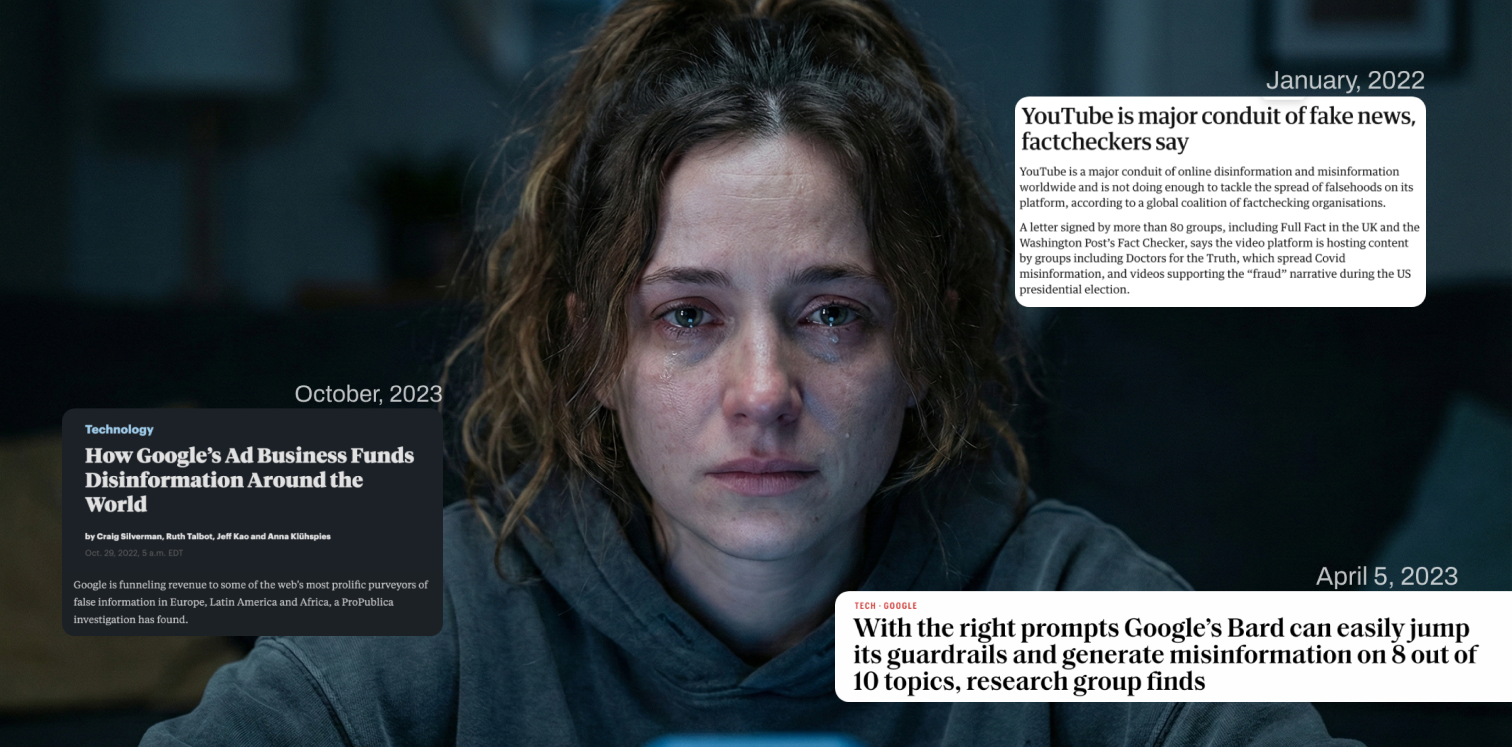
65 %
of Americans say they can't tell the difference between real and fake news
1 bil+
users reached by Google AI Overviews, already caught surfacing false info
70 %
prediction markets outperform expert forecasts on major events
_____ Work Highlight
Designing for trust ...
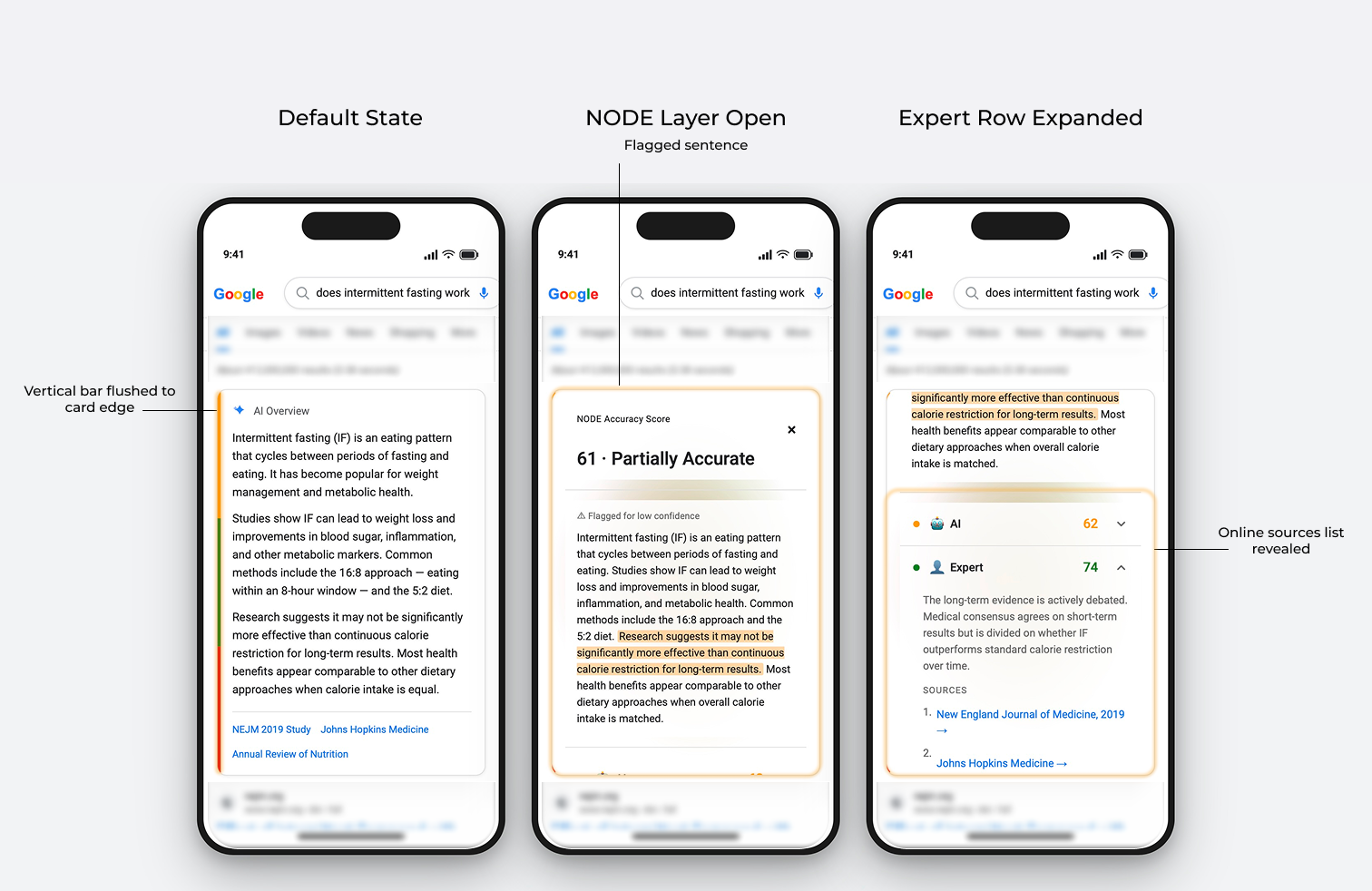
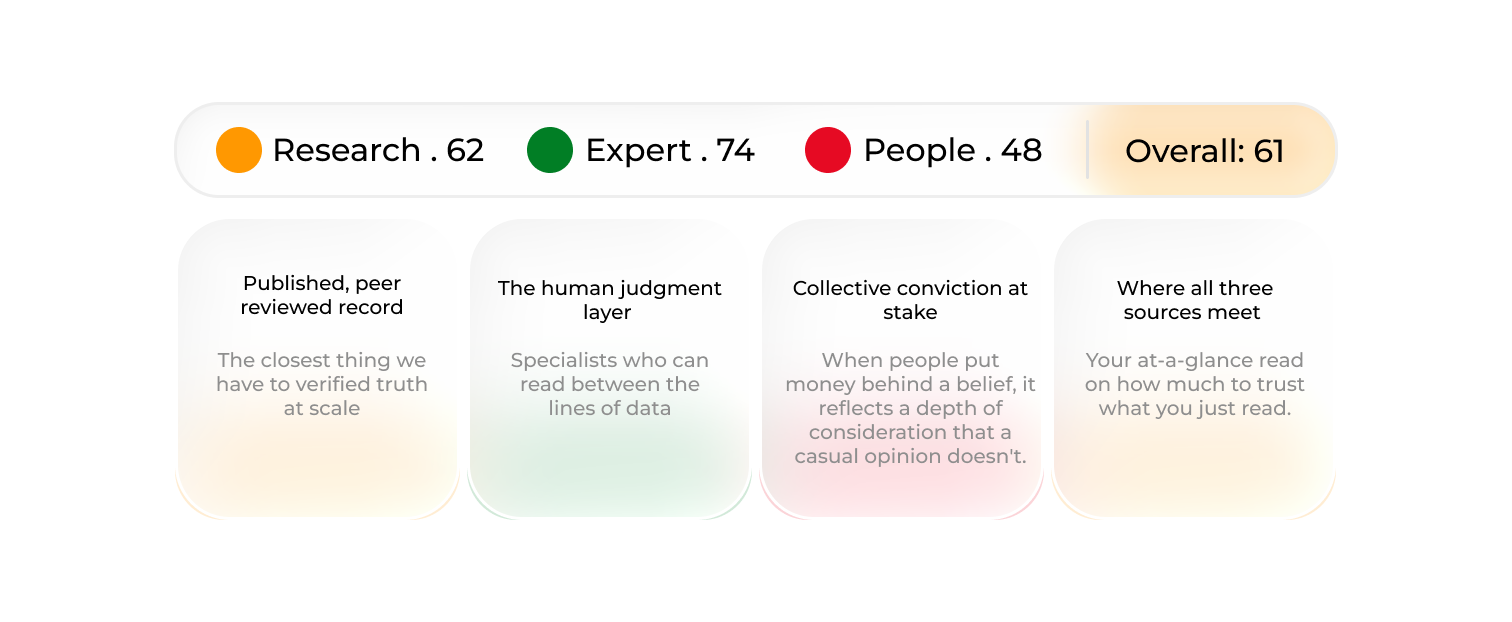
Most fact-checking tools give you a verdict. NODE gives you a conversation. The core design challenge was making three conflicting sources readable at a glance without flattening the nuance; so the UI was built around theme-level scoring rather than a single true/false label.
and inclusion
very design decision was filtered through one question, does this help the user trust their own judgement? That meant surfacing source conflicts explicitly, making scores explorable rather than decorative, and keeping the entry point lightweight so fact-checking feels like an option, not an obligation.
_____ Color Coding
_____ Conclusion
NODE is a bet that people don't need to be told what to think, they need better tools to think for themselves. As AI-generated content becomes the default surface of the internet, designing for transparency isn't a feature. It's the whole product.
Interactive
_____ Research Highlights
Each the team member chose to focus on different aspects of the topic.
Namely four research areas emerged
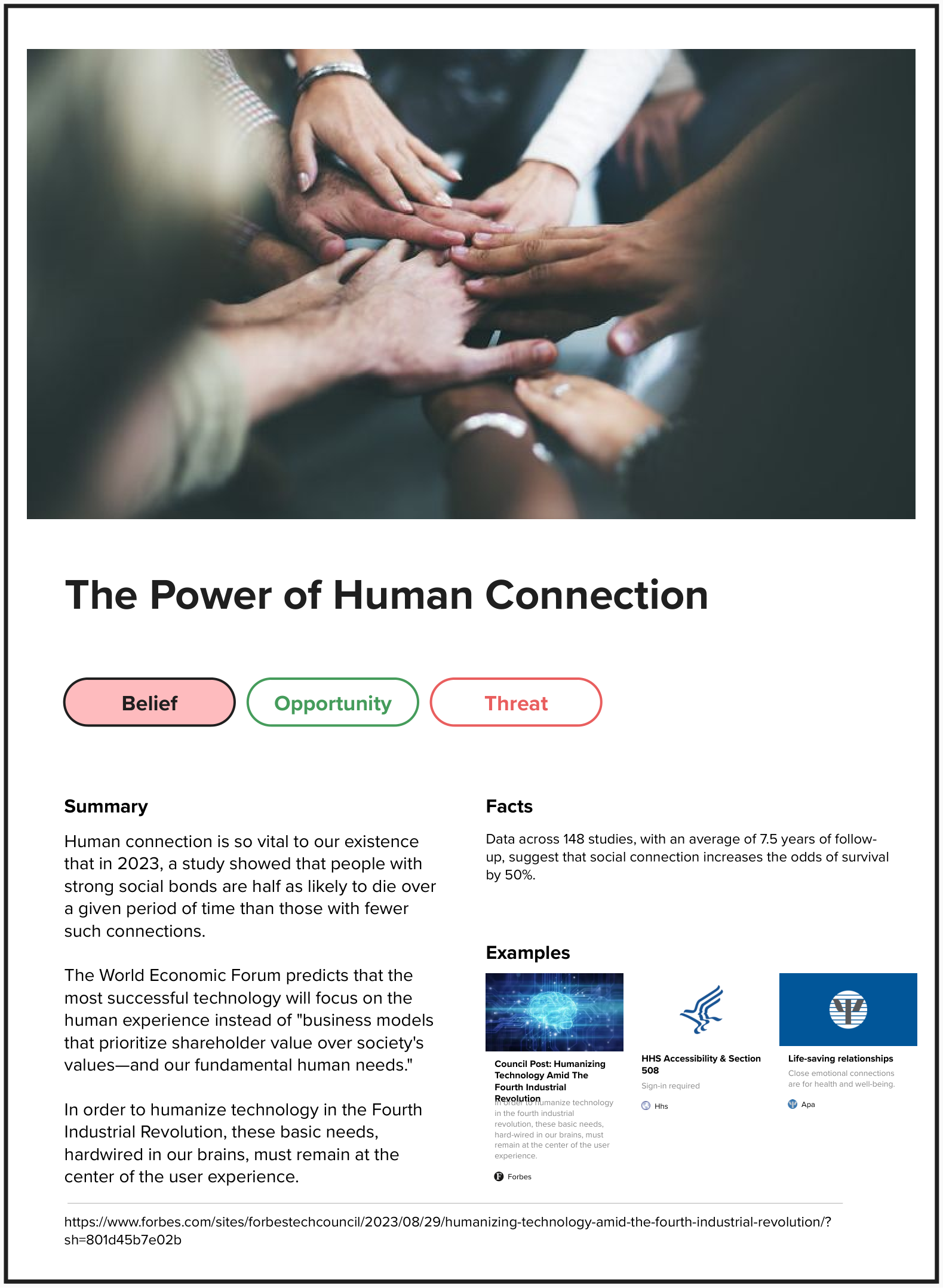
1. Parasocial relationships as a buffer for social support for minority and vulnerable communities
2. The need for Online Middle Grounds to combat rampant polarization.
3. The substantial power of Superstitious beliefs in shaping global economic dynamics.
4. The irreversible harm caused by Loss of corporate trust.
_____ Scenario Planning
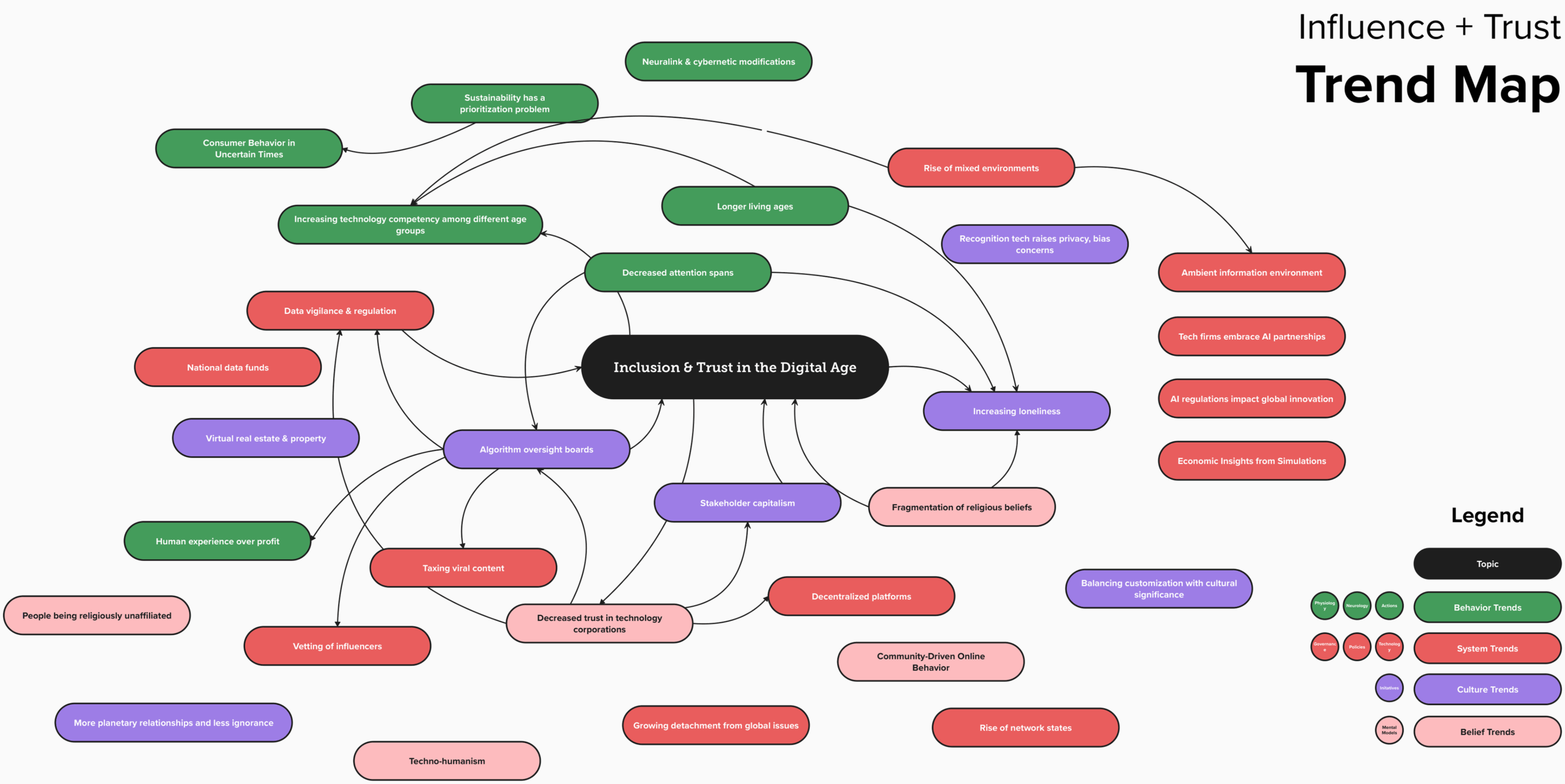
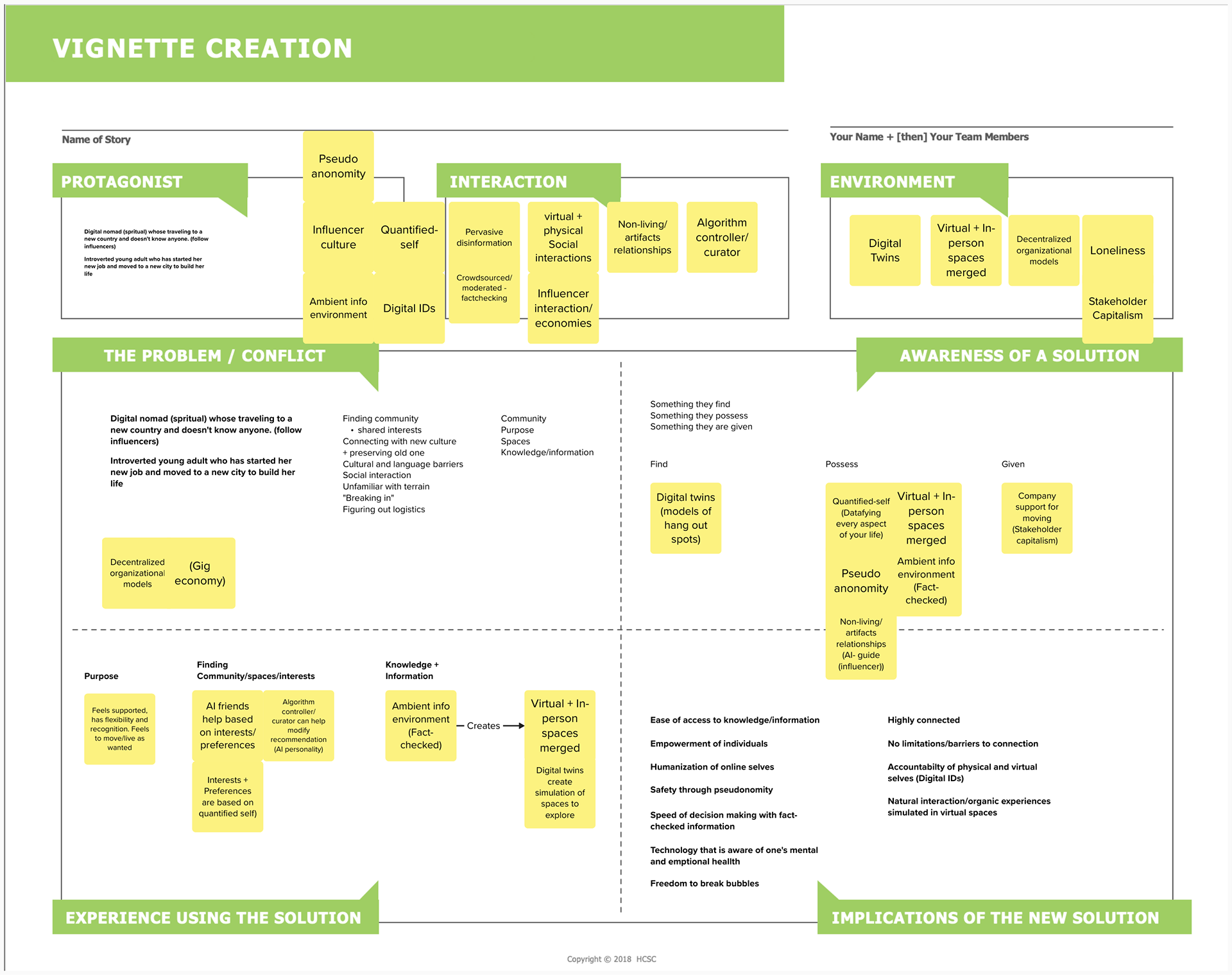
We narrowed down our scope of research by planning a scenario around a Digital Nomad and her challenges in a world 30 years from. This scenario planning also involved all team members building this future out through creative storytelling and sharing.
_____ Signals and Drivers
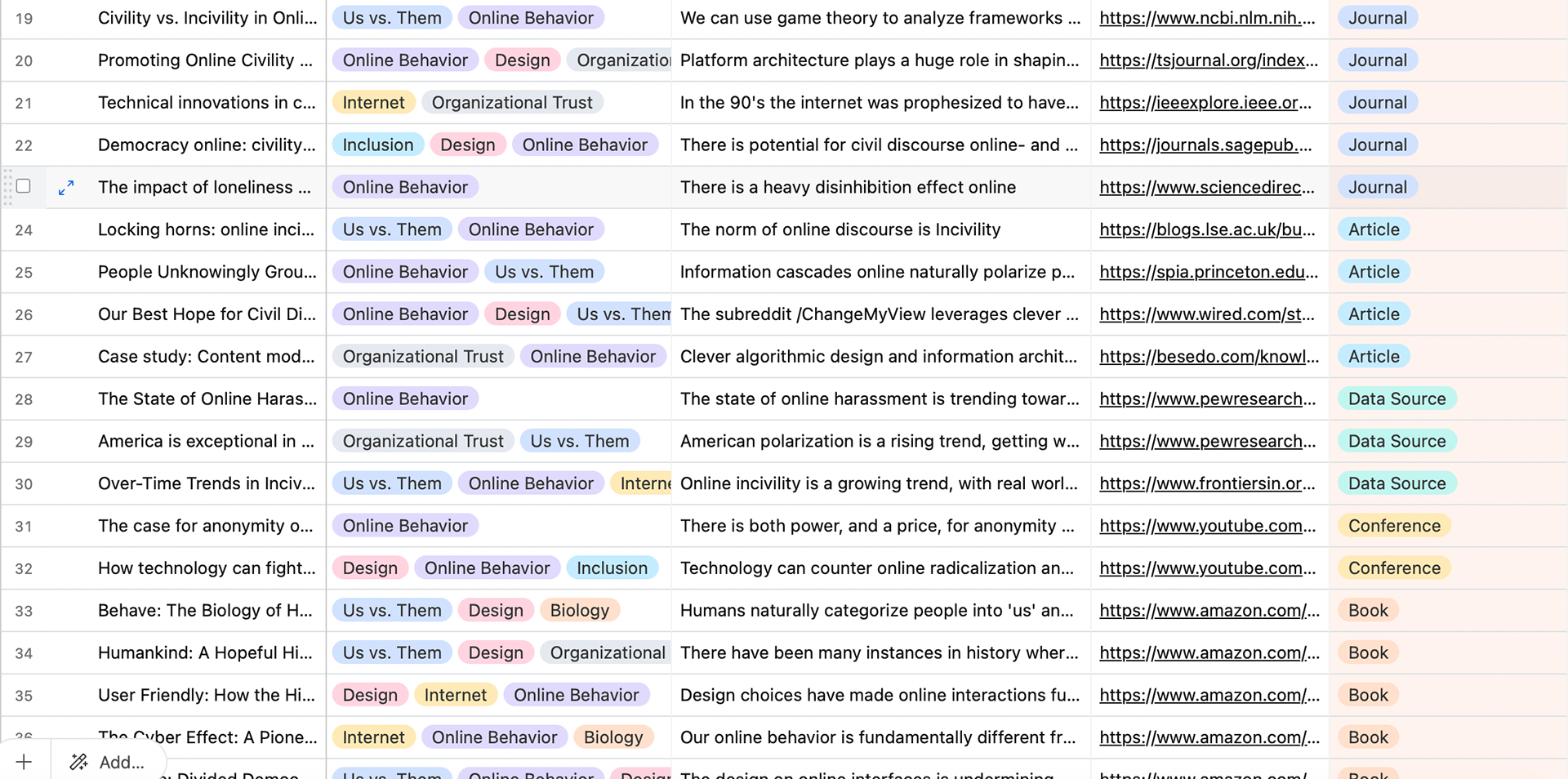
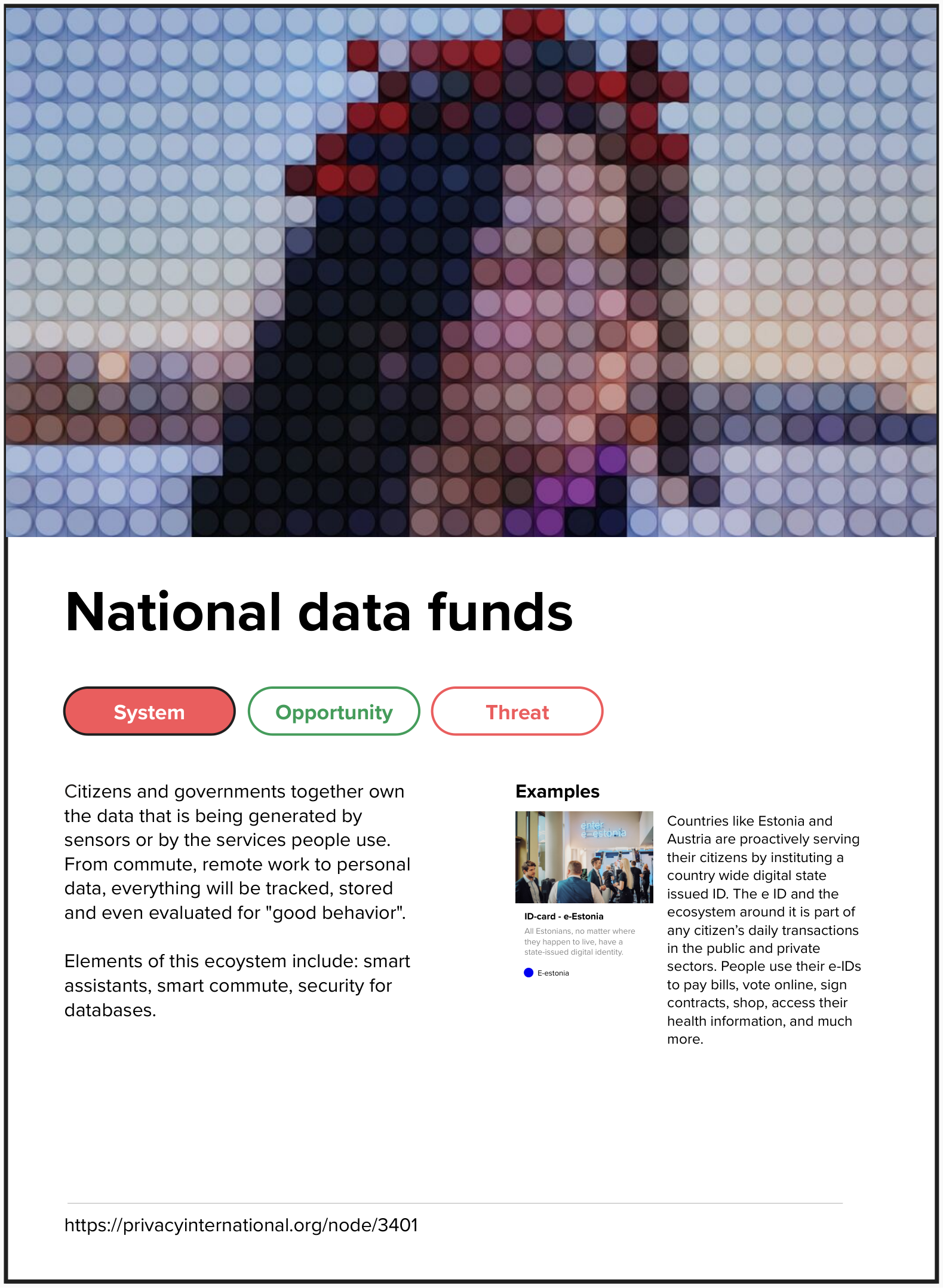
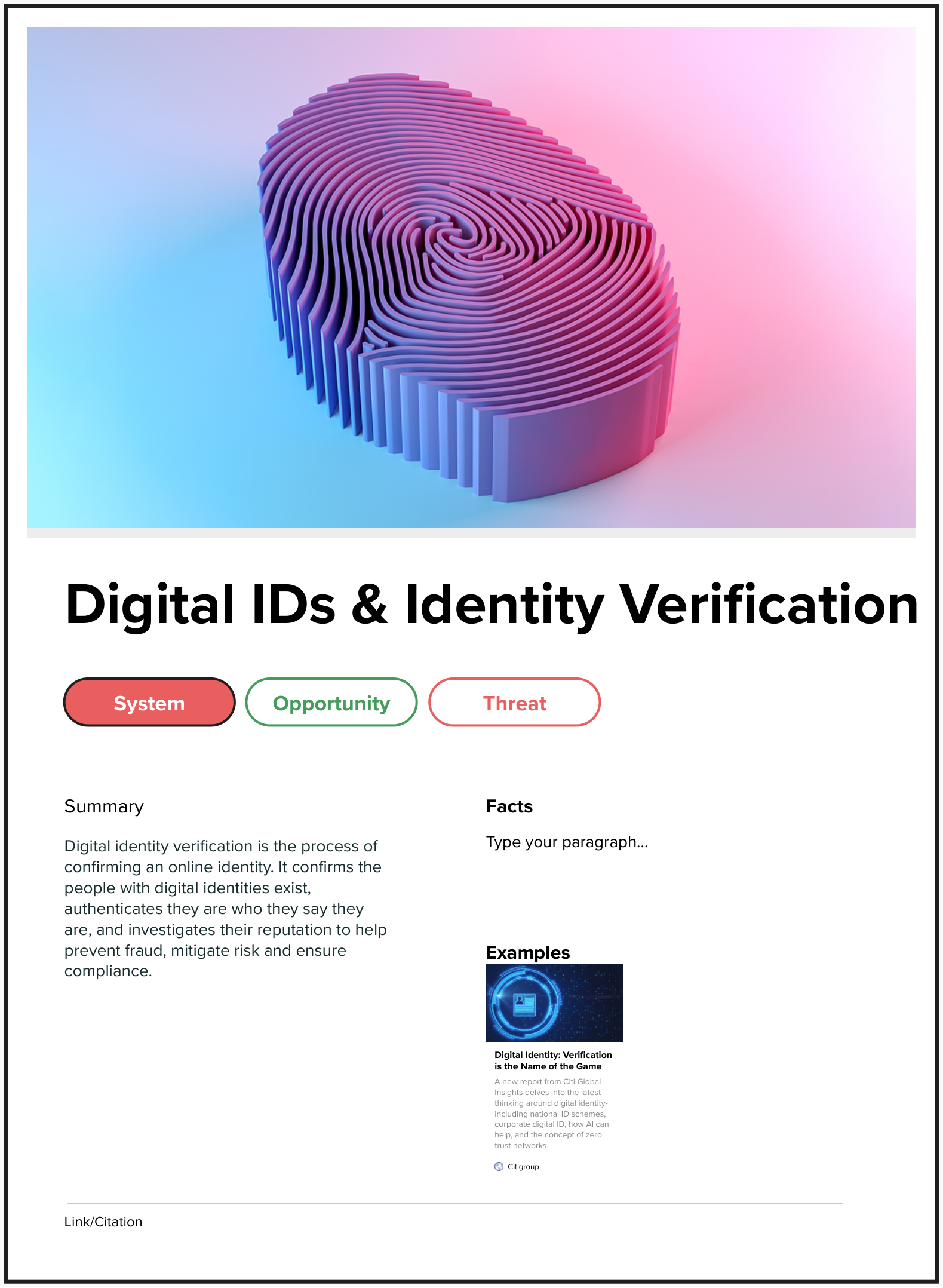
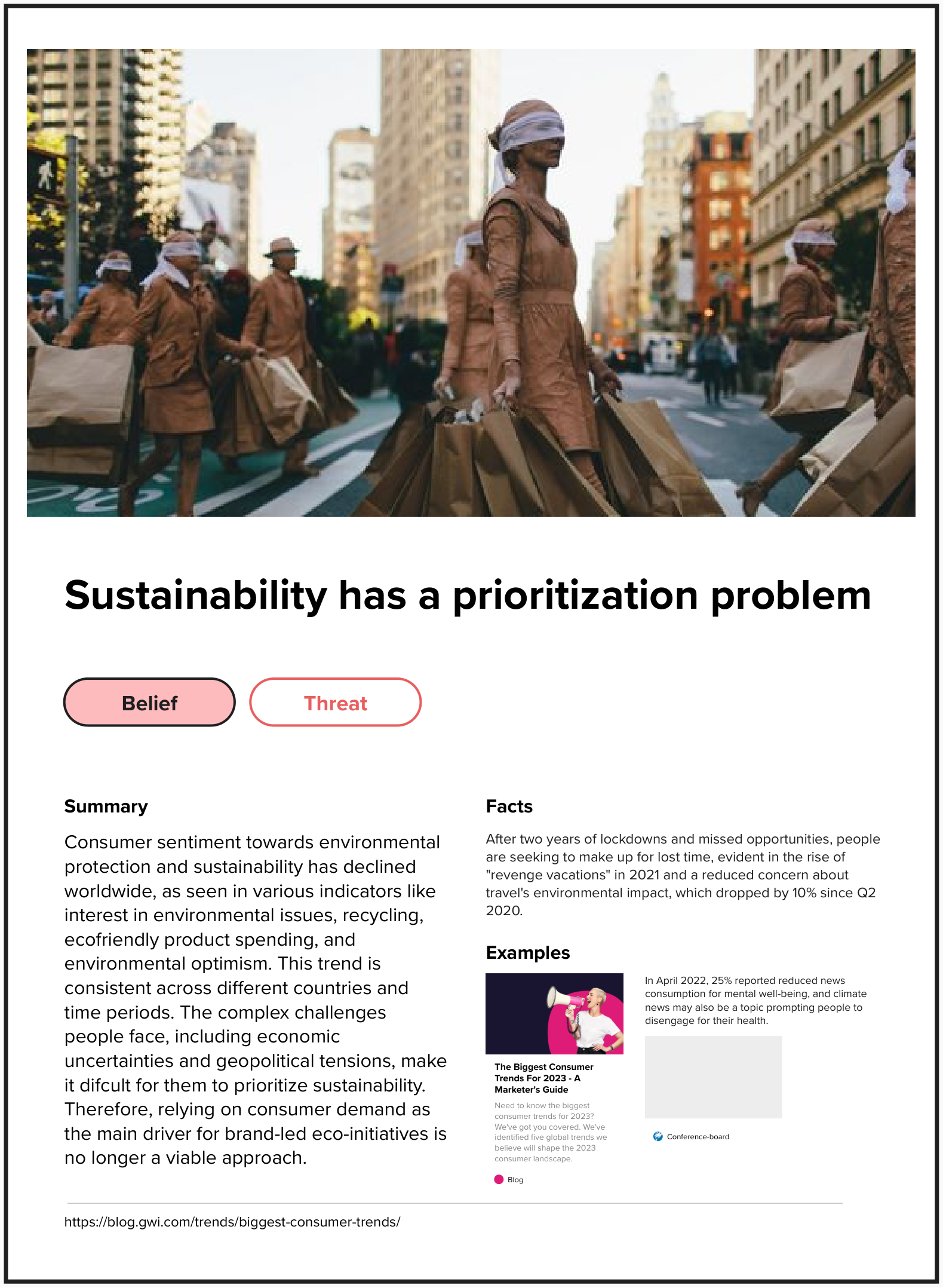
With the collectively synthesized research, we set out to do desk research on long-term forces that might be related or may have an influence on our topic and themes.
To validate the strength and probability of our drivers we tried to look for any evidence of existing niche movements or projects.
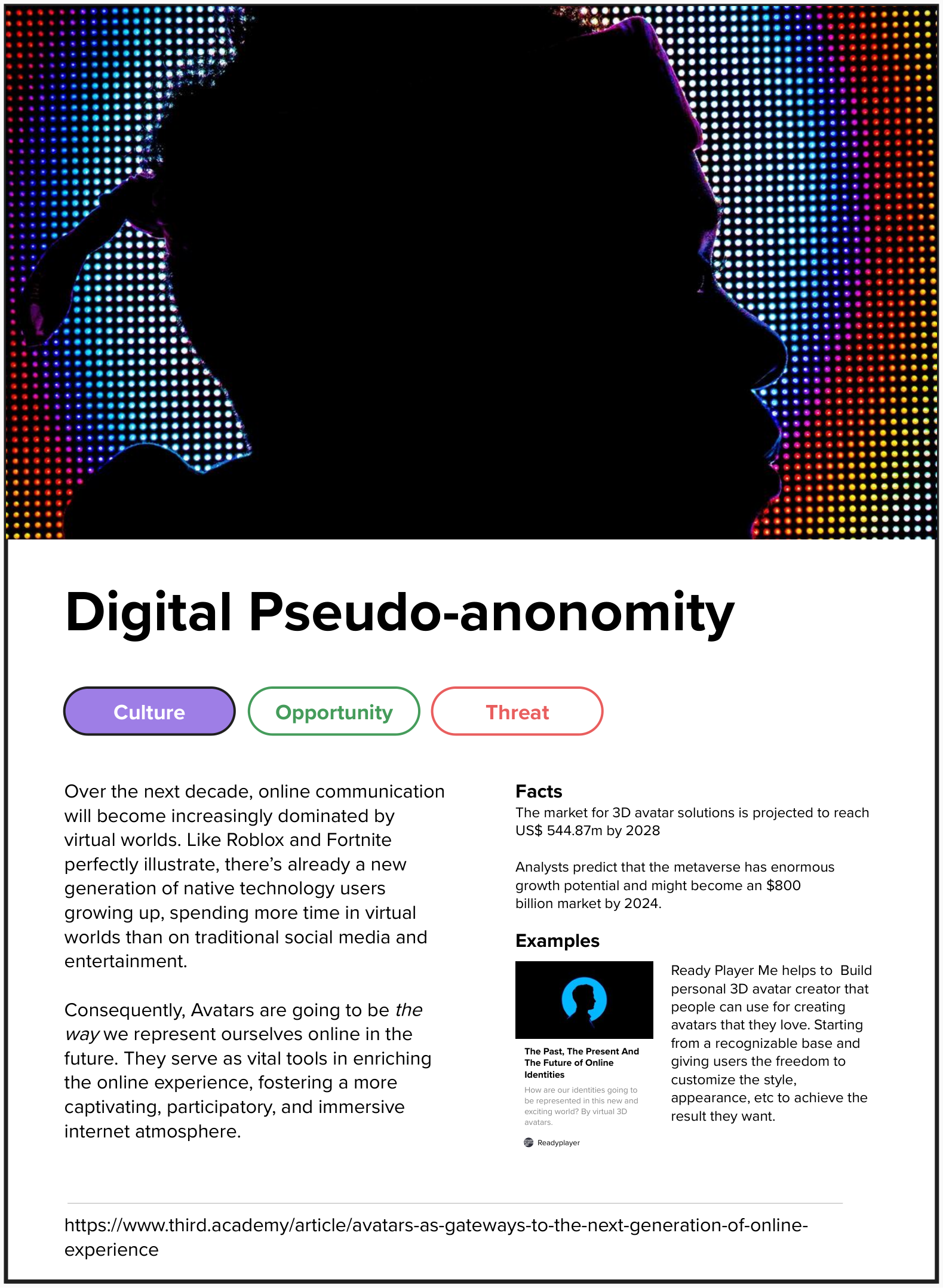
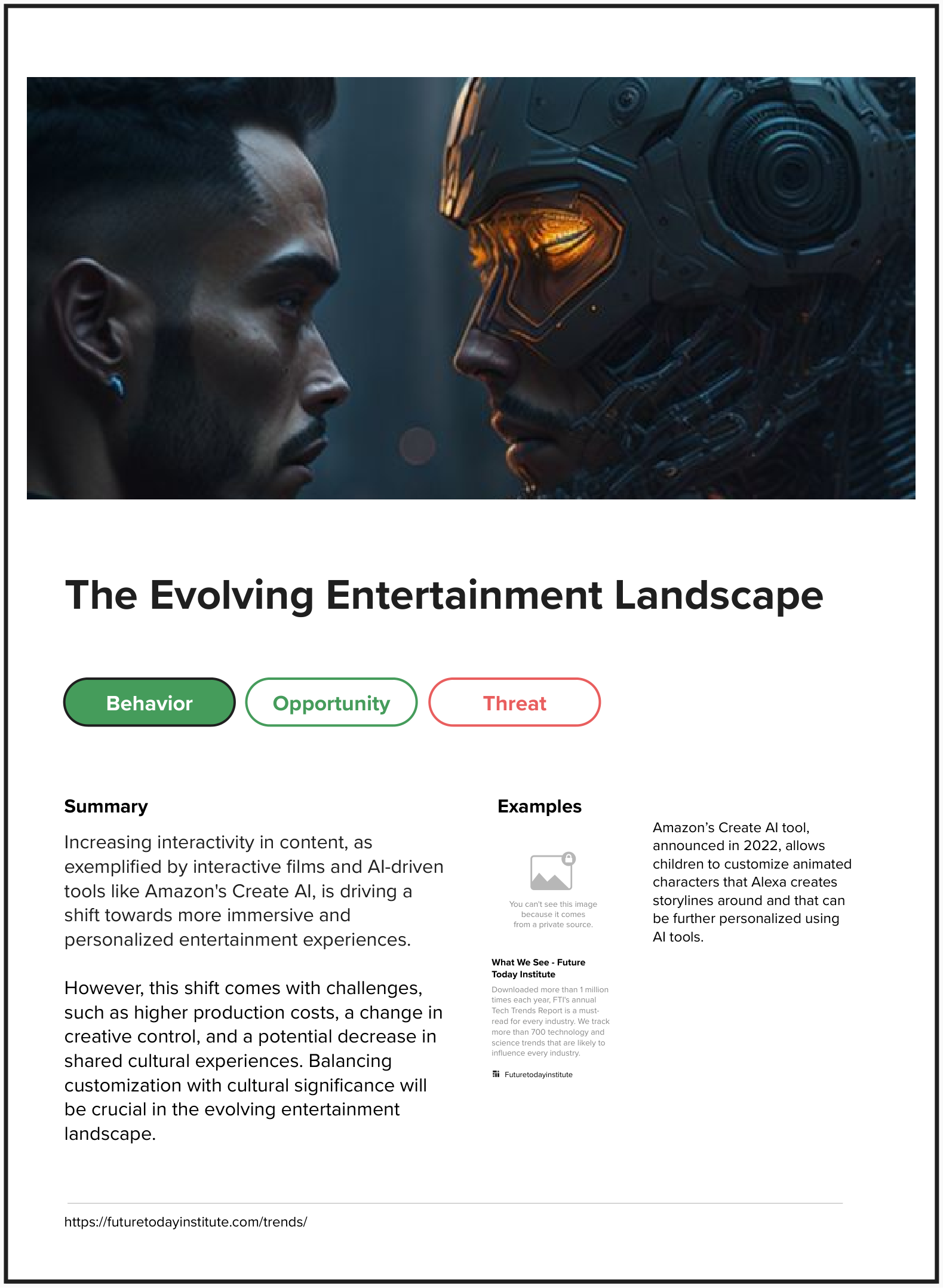
We could arrived broadly at the following trends:
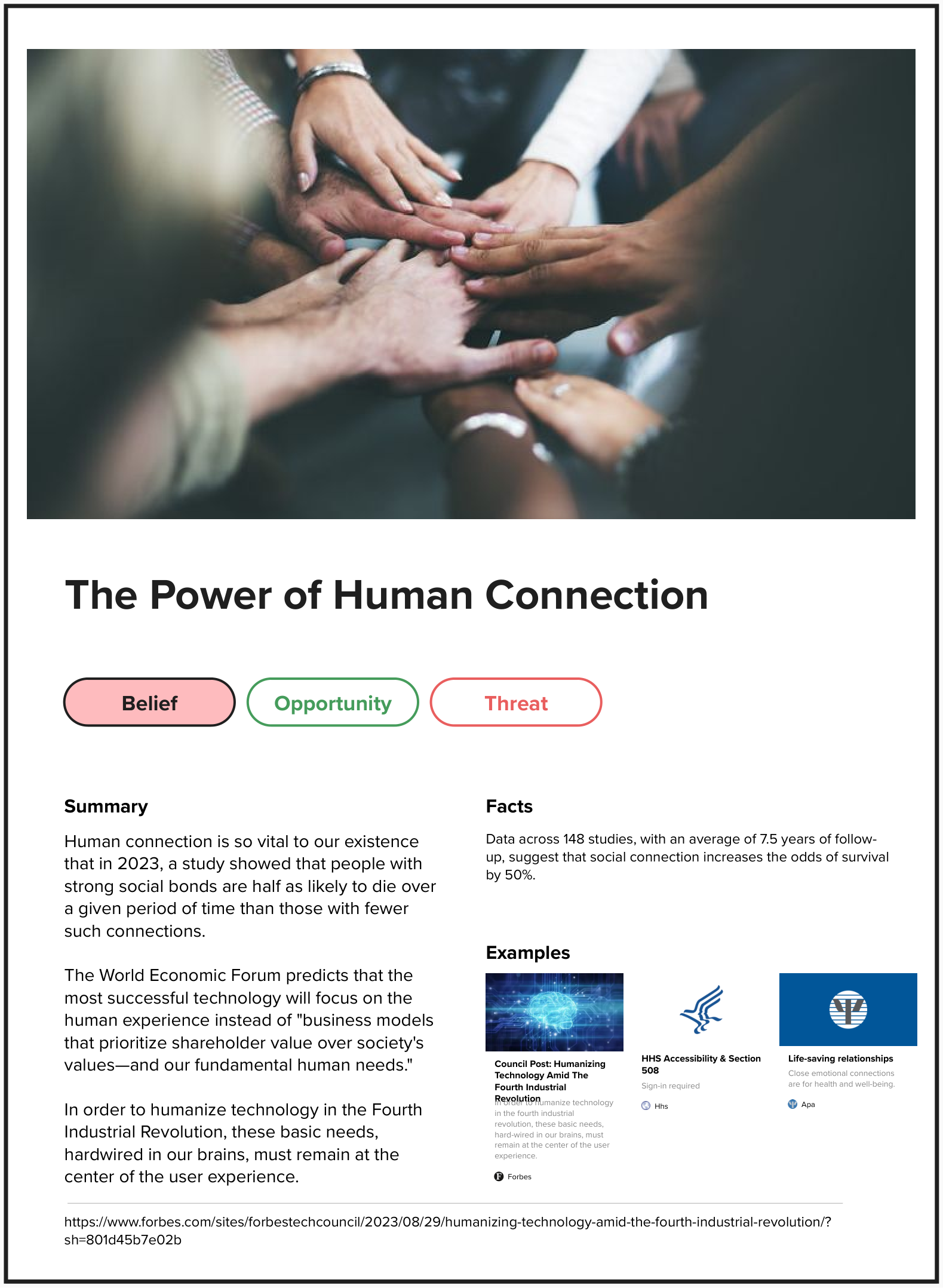
1. Loneliness due to social media
2. Online algorithmic control
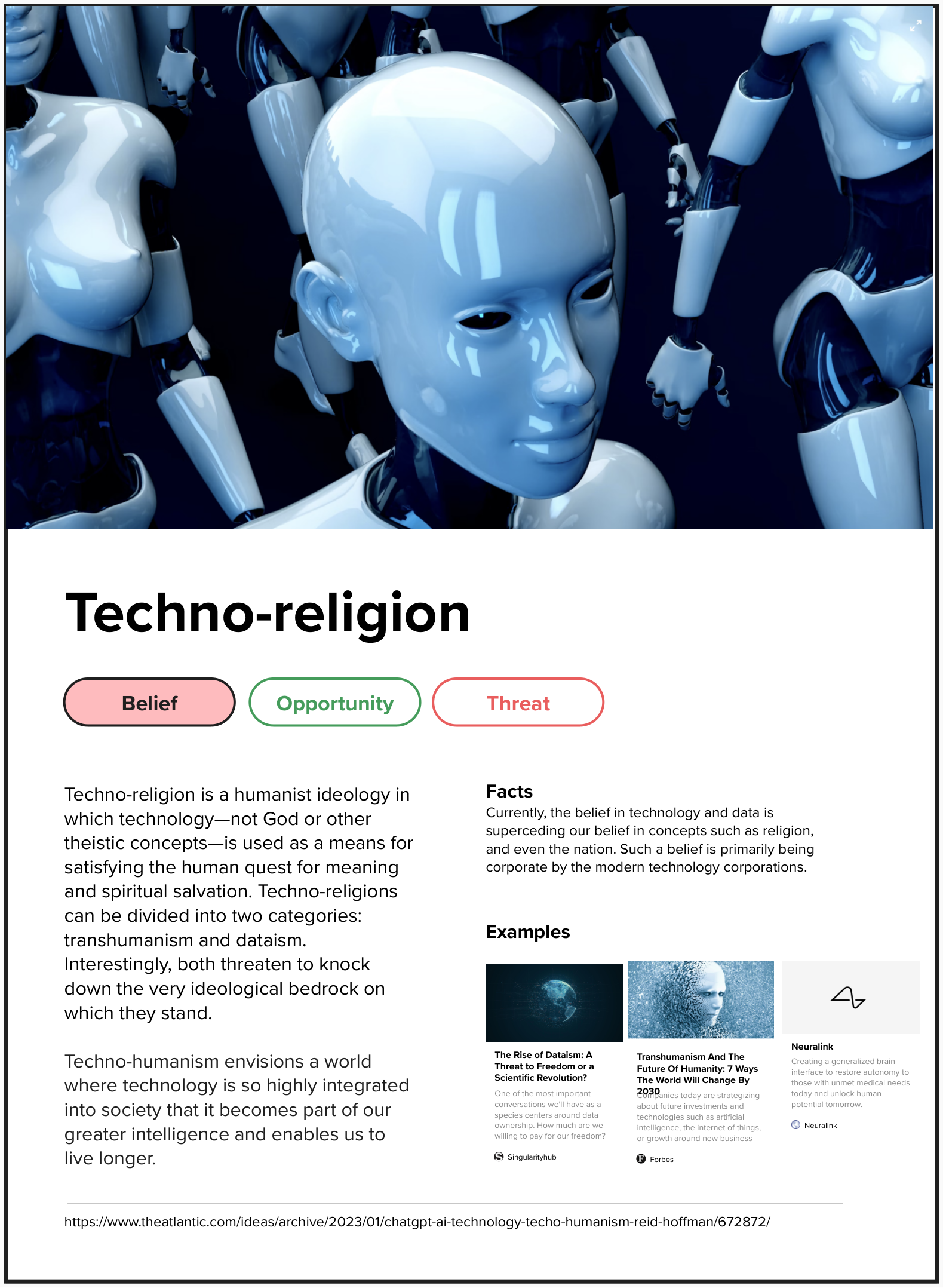
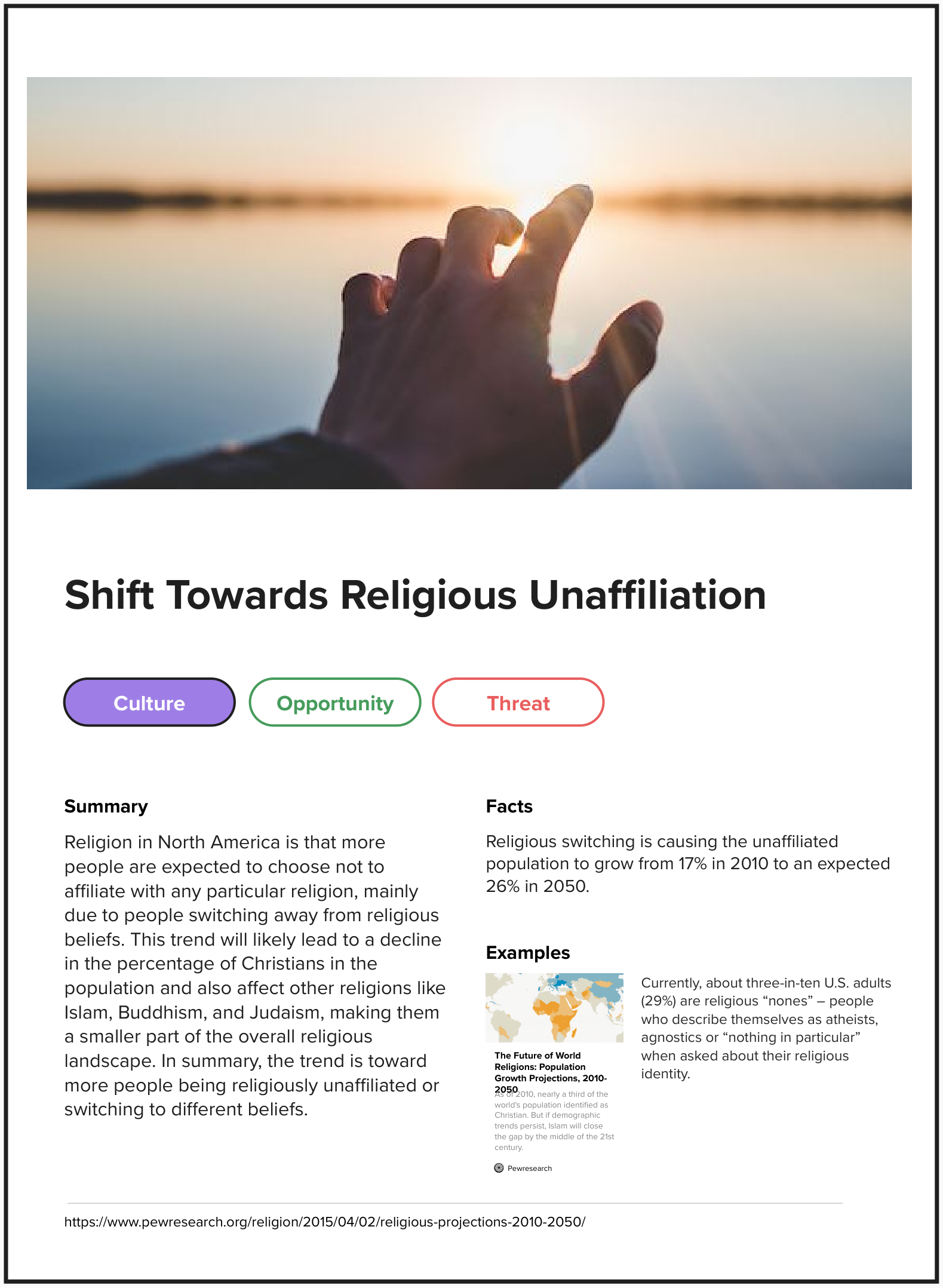
3. Techno Religion
4. Digital Pseudo Anonymity
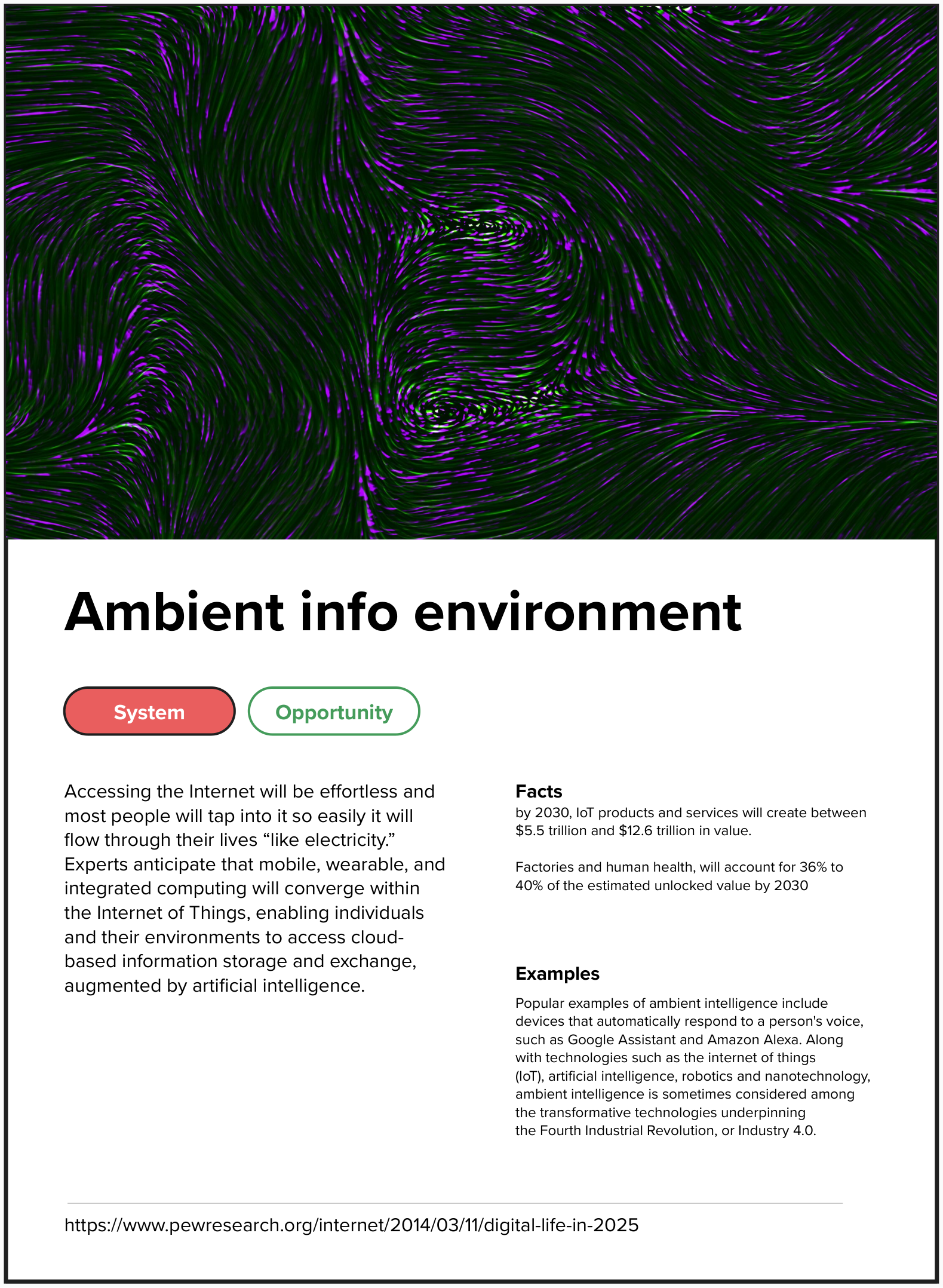
5. Ambient information system
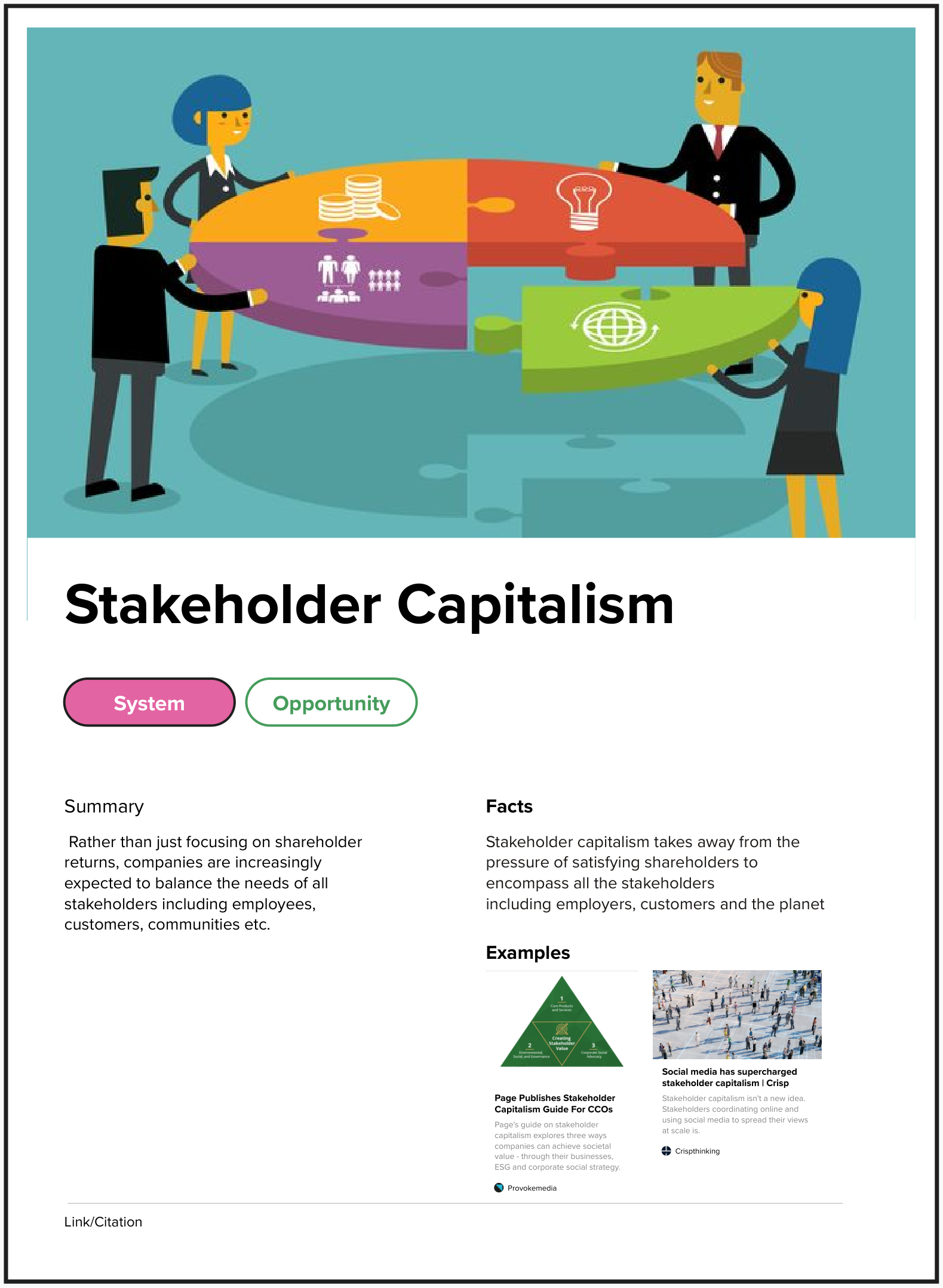
6. Stakeholder capitalism
7. Shift towards religious affiliation
8. Taxing viral misinformation


_____ Action Roadmap
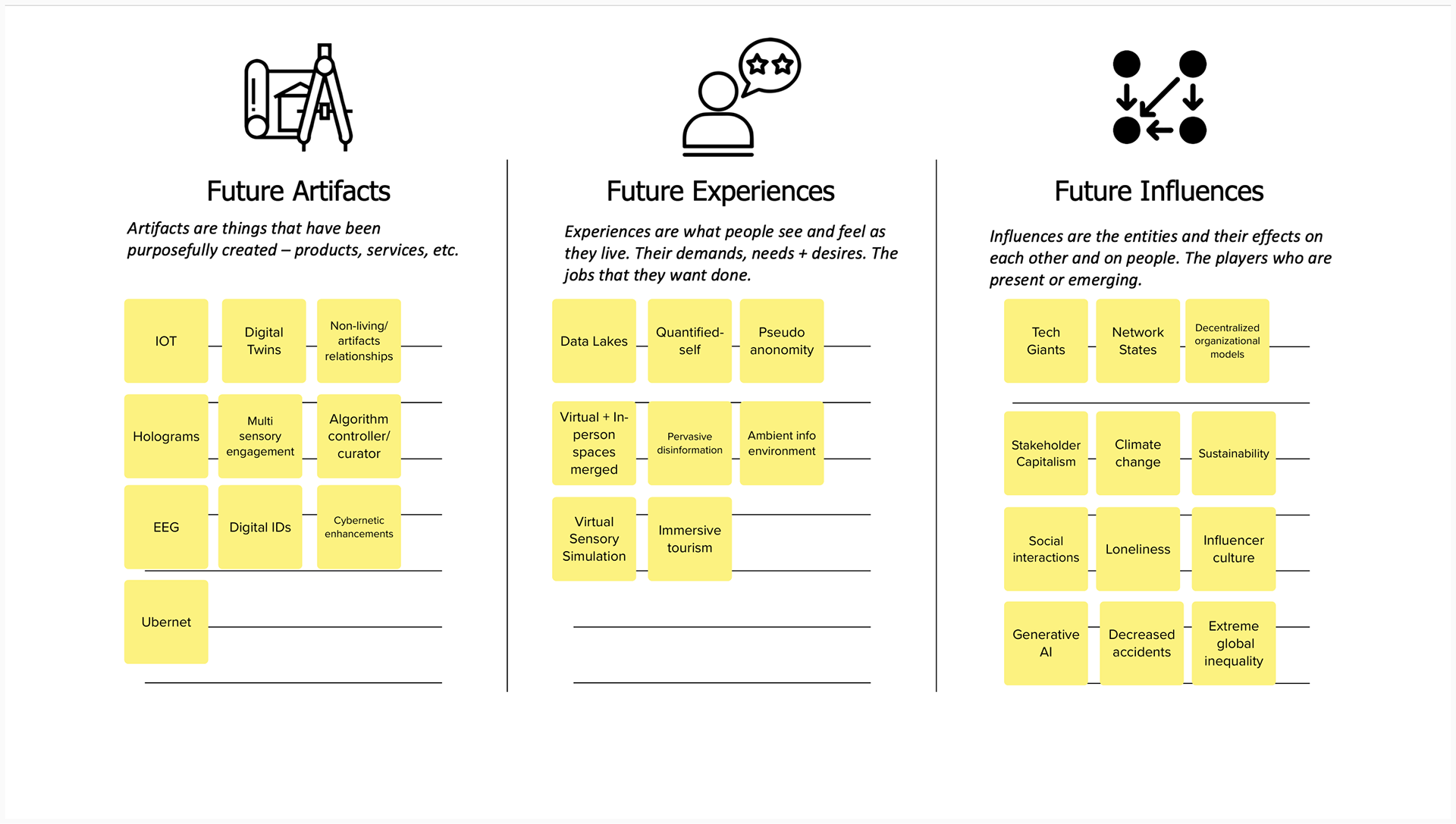
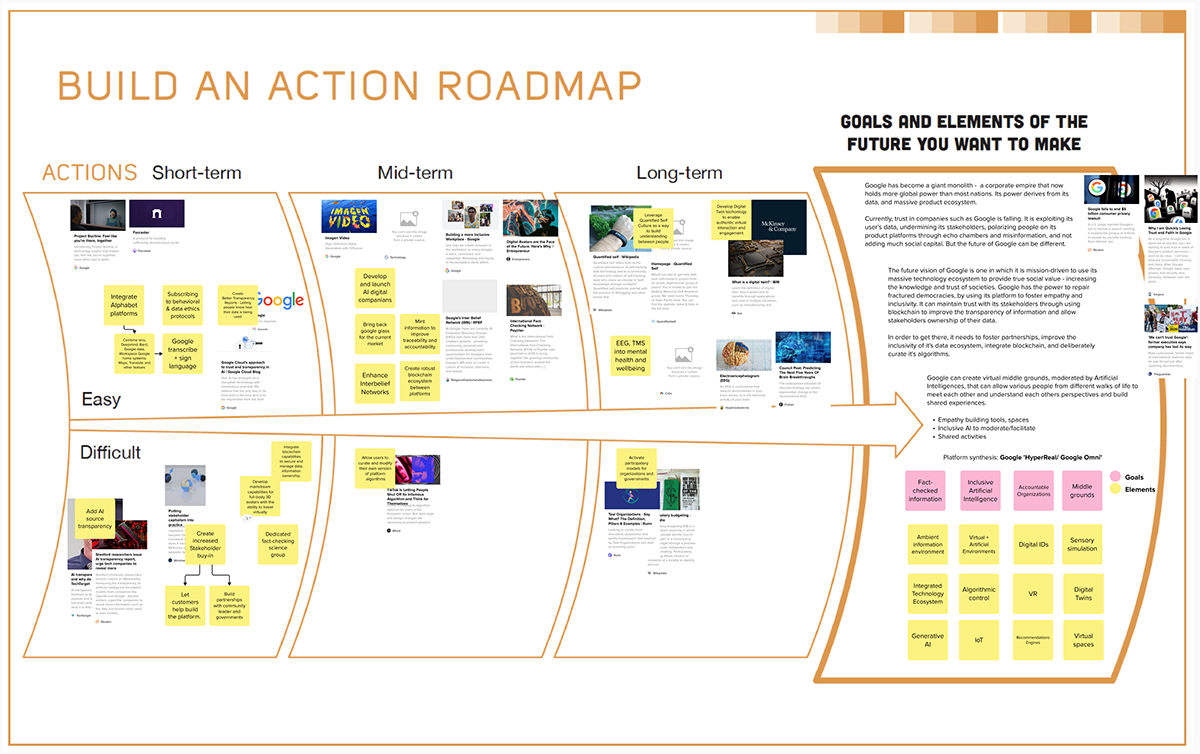
After determining key future artifacts, experiences and influences, we did additional research to hypothesis and predict how these experiences would play out on our future time of 10 years. Along with this we assessed the current state of Google and built a hypothesis on its future problem areas.
Based on these two activities we built an action roadmap for Google to course correct and build towards a future with trust and inclusion for all the stakeholders involved.
United States
Email: sampadapote1@gmail.com
© Sampada Pote 2025