
NESTSETTLE
3.6 million eviction cases are filed every year in the United States. Most stem not from bad actors; but from broken communication, missing transparency, and a system that gives neither side the tools to resolve conflict early.
February 2026
DOMAIN
Proptech | Civic
ROLE
User Researcher
Product Designer
Strategist
TOOLS
Mural
Figma
Slack
_____ Problem Statement
The rental market is broken on both sides
The US has approximately 44 million renter households. Each one is a relationship between a tenant and a landlord; yet both sides operate with incomplete information, no shared tools, and a dispute-resolution system that defaults to an adversarial courtroom. The result is a market where minor friction escalates into major crisis: unpaid rent becomes an eviction; a delayed repair becomes a habitability lawsuit; a missed deposit return becomes a small claims case.
The underlying issues are structural, but the experience failures are designable. Communication is informal and undocumented. Maintenance requests lack accountability loops. Lease violations go unacknowledged until they become legal. Both sides lack tools that build shared understanding rather than arm both parties for conflict.
22.6M
Cost-burdened renter household
$4k
Average landlord turnover cost
14M
Informal evictions per year
_____ Research Findings
What the data reveals about both sides
Secondary research drawing on data from the records shows consistency in where and why these relationships break down.
_____ User Personas
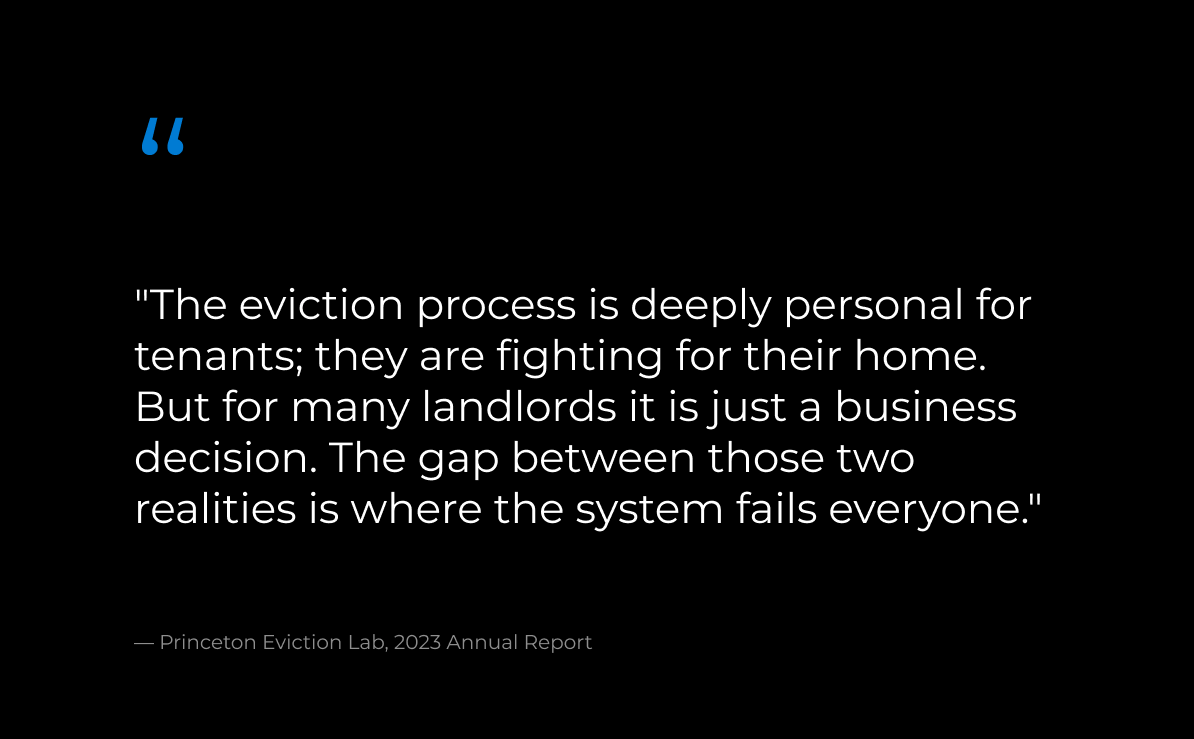
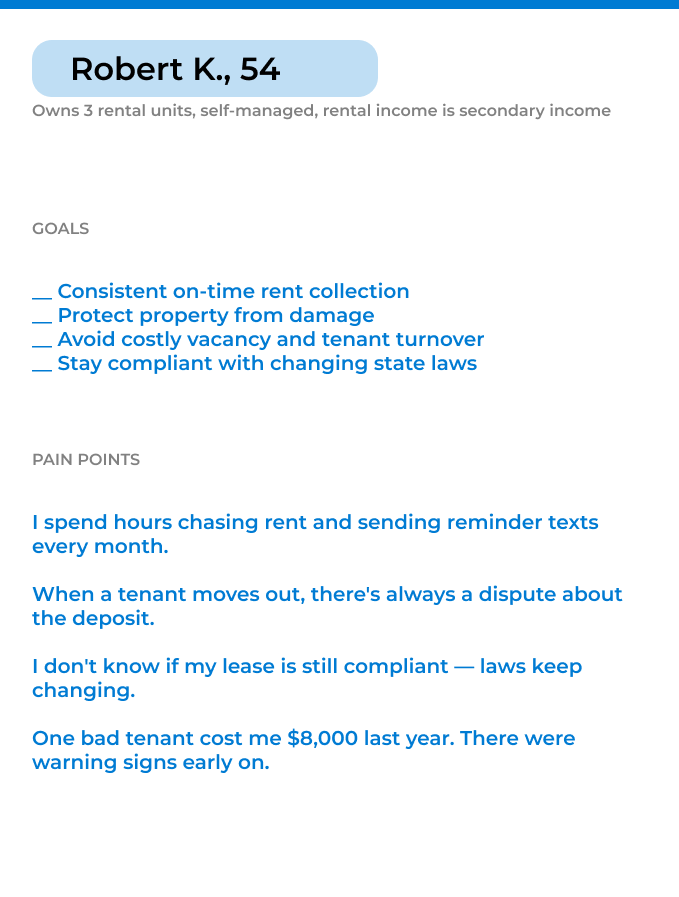
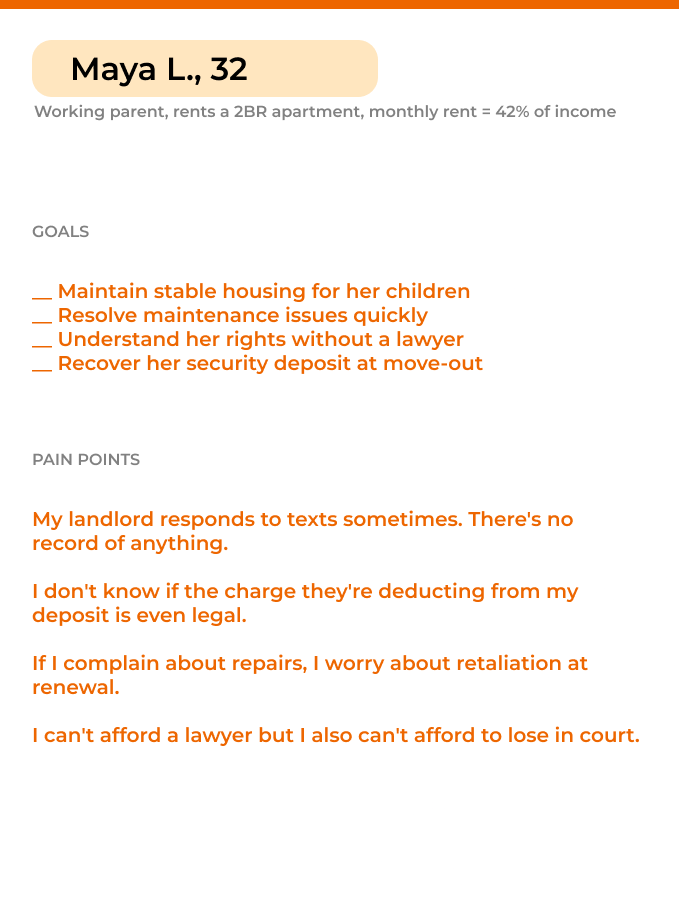
Two sides. One broken experience.

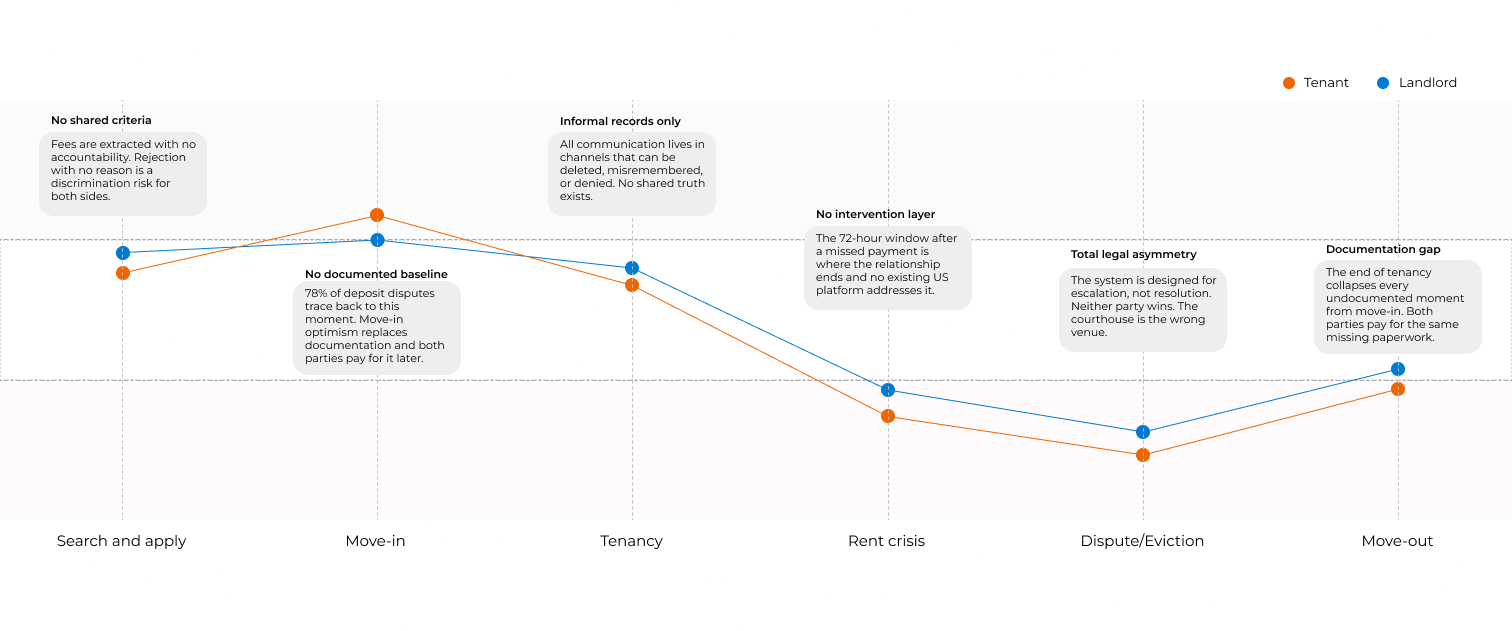
_____ Journey Map
_____ Design Opportunities
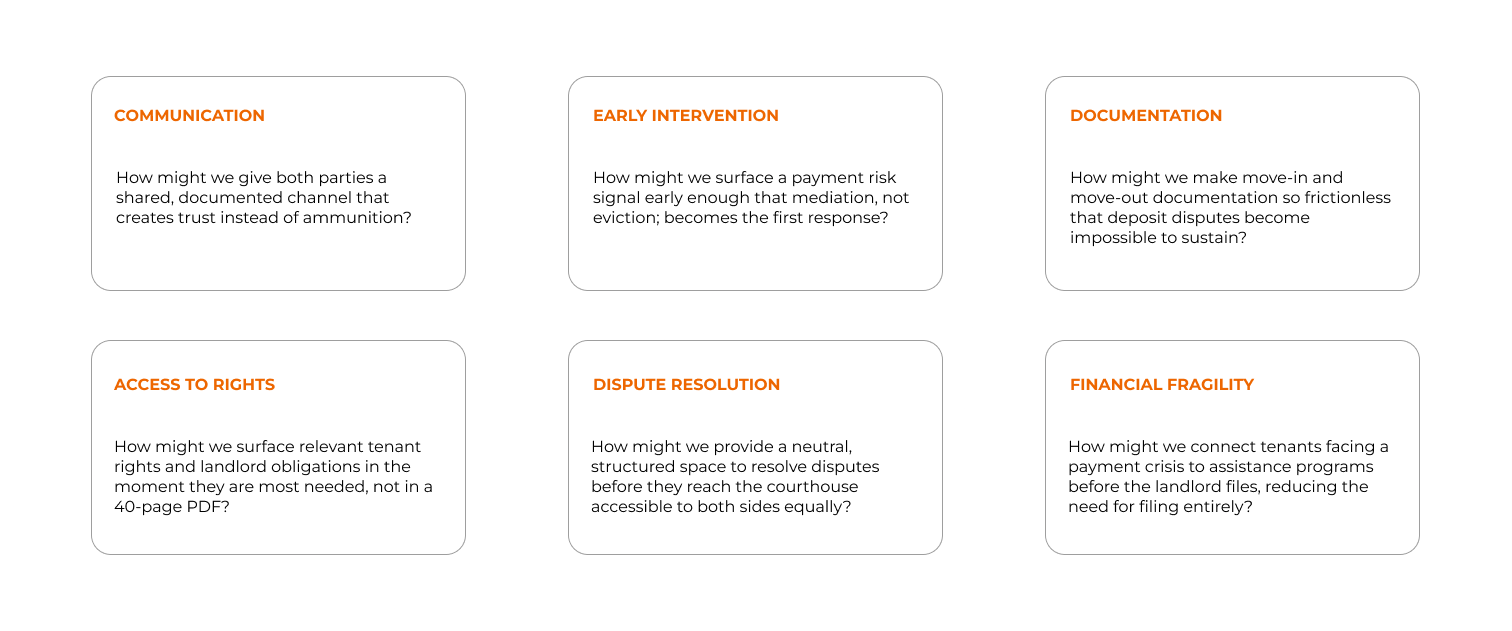
"How might we..." reframe the problem
_____ Initial Iterations
_____ Proposed Solution
Between Conflict and Courthouse
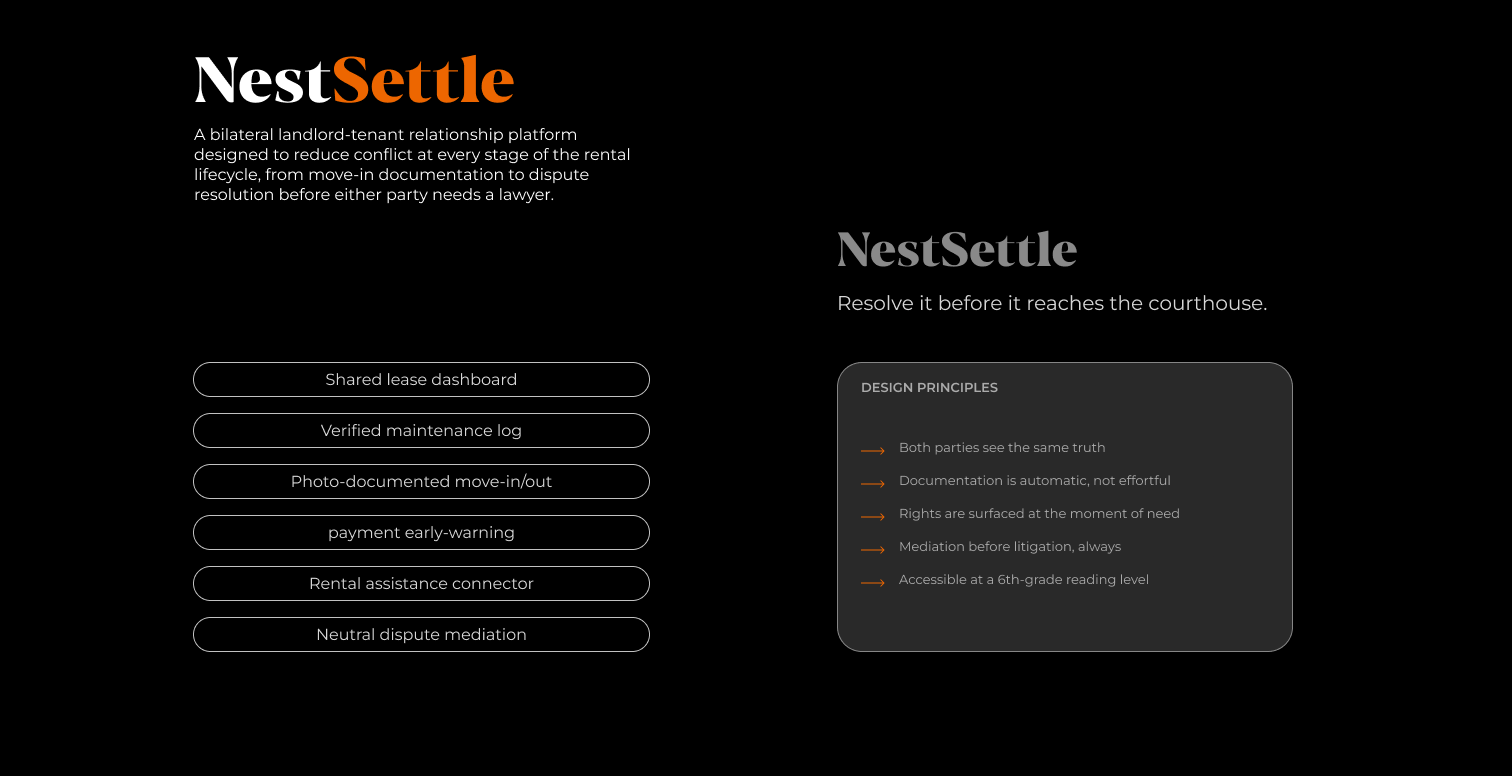
The UX opportunity is not in the courtroom, it is in the six weeks before a landlord files. Research shows that most evictions could be resolved if both parties had a shared communication channel, documented history, and access to assistance options before legal action is taken. The proposed product concept addresses this gap directly.
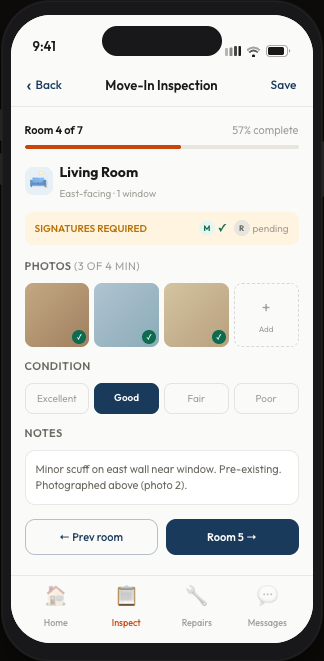
SCREEN 01 OF 04
Move-In Condition Log
Photo-verified, dual-signature room documentation. Addresses the #1 cause of deposit disputes: no agreed-upon baseline at move-in.
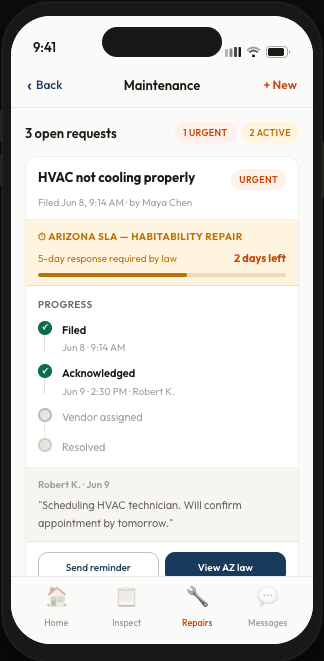
SCREEN 02 OF 04
Maintainance SLA Tracker
State-specific legal deadlines, surfaced in the moment. Tenants know their rights; landlords see the clock. 38% of landlords cite maintenance as their biggest challenge.
SCREEN 03 OF 04
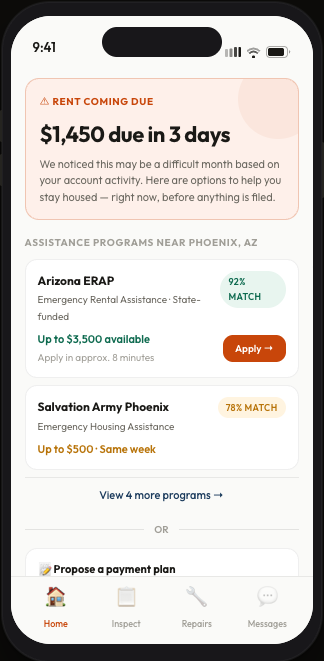
Pre-Eviction Crisis Hub
Surfaces assistance before a filing. The 6-week window before eviction is where design can intervene most, connecting tenants to $46B in available but unknown assistance programs.
SCREEN 04 OF 04
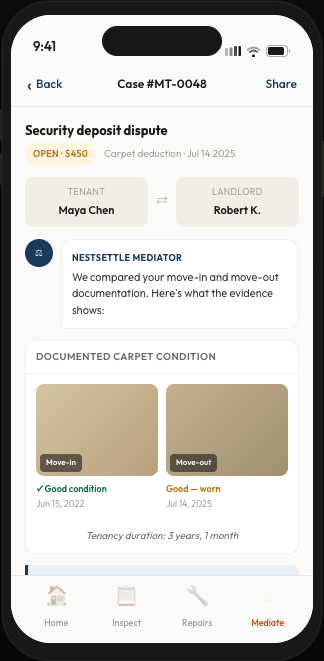
Dispute Mediation
Neutral, evidence-based resolution before any legal filing. Uses documented move-in/out photos and state depreciation law to propose a fair outcome, replacing the courthouse with the app.
_____ Why it looks the way it looks
_____ Projected Impact
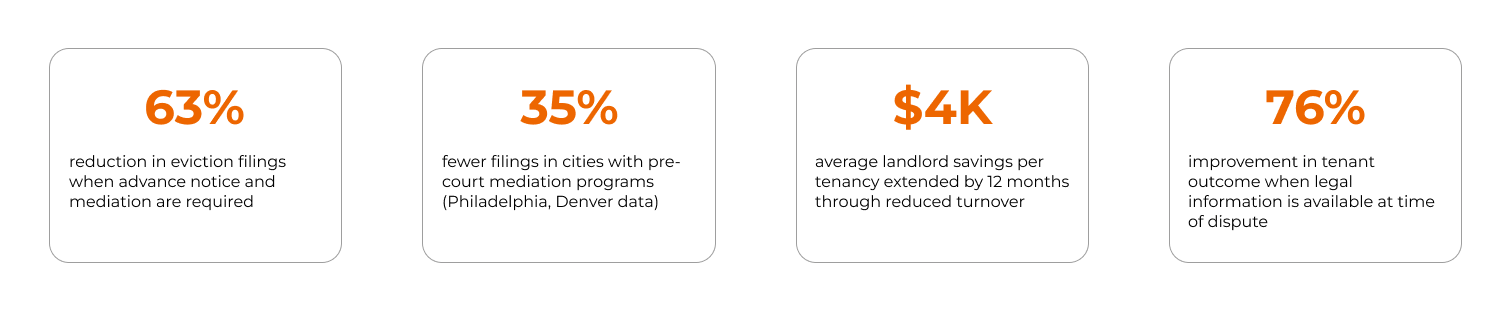
Based on existing research into pre-court mediation programs, right-to-counsel outcomes, and digital maintenance platforms, the following impact projections are grounded in documented precedent, not extrapolation.
United States
Email: sampadapote1@gmail.com
© Sampada Pote 2025