
Healthcare Equity
and The Immigrant
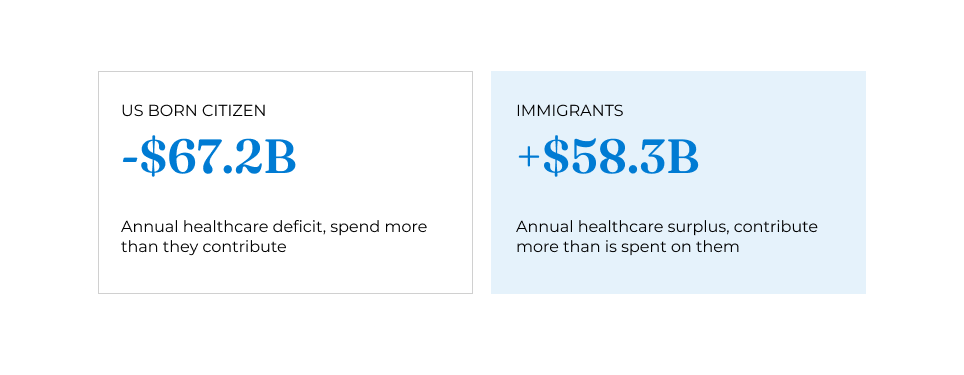
Immigrants contribute a $58.3 billion annual surplus to the US healthcare system. They receive far less than they put in. This project investigates the systemic gap and maps what change would actually require.
2024
SUBJECT
Systems Design
ROLE
Product Designer
TOOLS
Mural
Slack
Adobe Indesign
Google Workspace
TEAM
5 people
Tax Contributions of Immigrants
$58.3B
Annual immigrant surplus in US healthcare
$1,284
Net contribution per immigrant, per year
22.3%
Less spent on immigrant care vs. US born
THE PARADOX
They fund the system.
The system doesn't
serve them back.
Immigrants in the United States pay into Medicare, Medicaid, and private insurance at the same per-capita rate as US-born citizens. Yet third-party payers spend 22.3% less on immigrant healthcare than on care for US-born residents, because immigrants use healthcare significantly less, often due to language barriers, fear, and lack of coverage.
The result is a structural surplus, a gap between what immigrants contribute and what they receive, that effectively subsidises the healthcare of everyone else. Our research set out to understand why this gap persists, and what a systems-level design response would look like.
"We need a unified medical language."
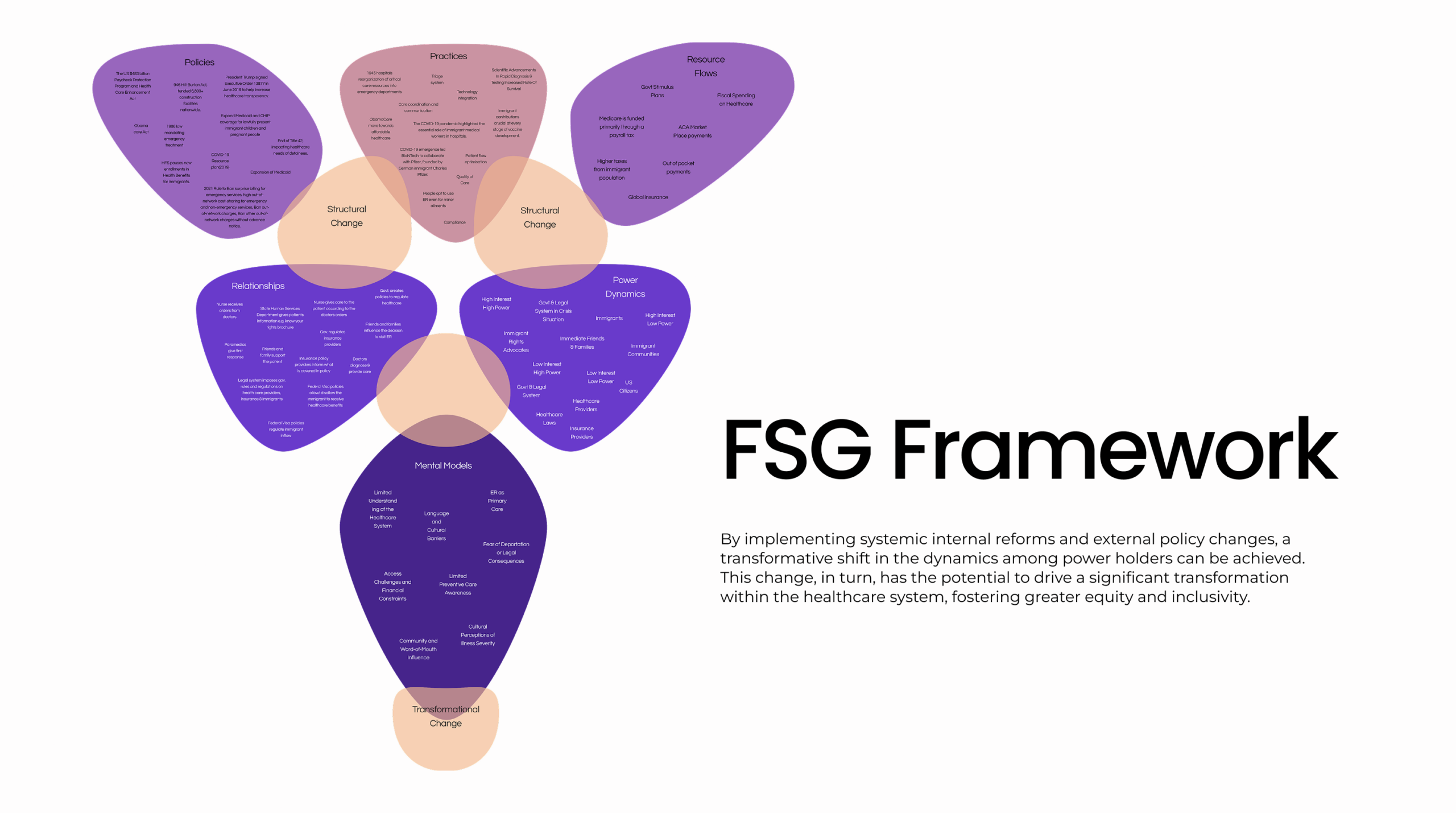
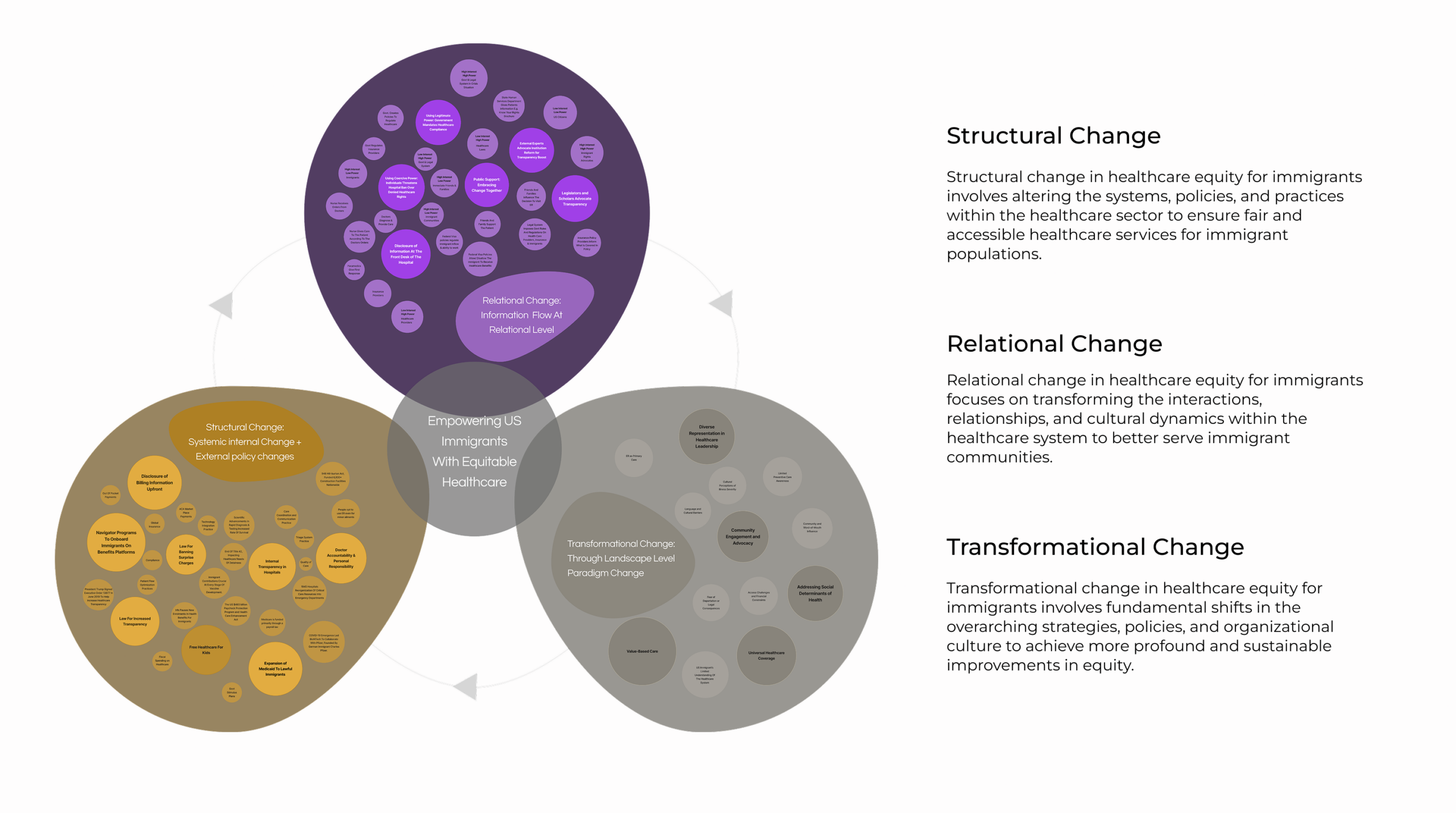
Sustainable Change Nexus
Conclusion
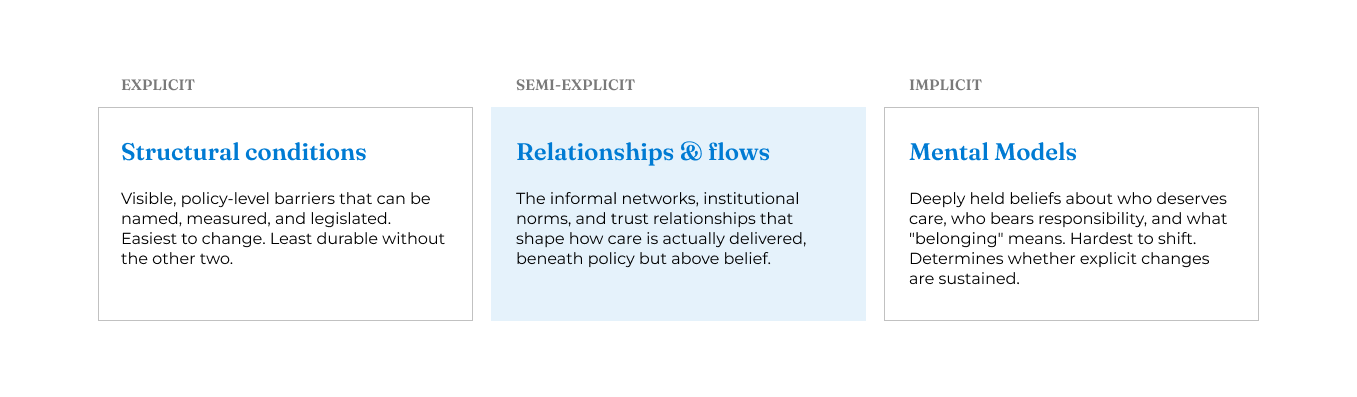
Shifts in system conditions are more likely to be sustained when working at three different levels of change: explicit, semi-explicit, and implicit.
Their interdependency creates a unique rolling effect if solutions are applied across them.
United States
Email: sampadapote1@gmail.com
© Sampada Pote 2025