
Money Talks
Money is personal, cultural, and often wrapped in silence. MONEY TALKS is a 14-week design research project that set out to change that, not by building another budgeting app, but by creating a toolkit that makes financial conversations between families feel safe, and real.
[Research-heavy · 12 min read]
SUBJECT
Agile for Design Outcomes
ROLE
Product Designer
TOOLS
Mural
Github
Zenhub
Adobe Indesign
Adobe Photoshop
Microsoft Workspace
TEAM
Vedika Mevawala | Bhairavi Ruparel | Tanvi Waghray | Anam Koradia
Challenge
South Asian-American families rarely talk about money openly. Cultural taboos, generational differences, and a lack of shared language leave teenagers financially unprepared and parents unsure how to start the conversation without overwhelming or losing control.
Solution
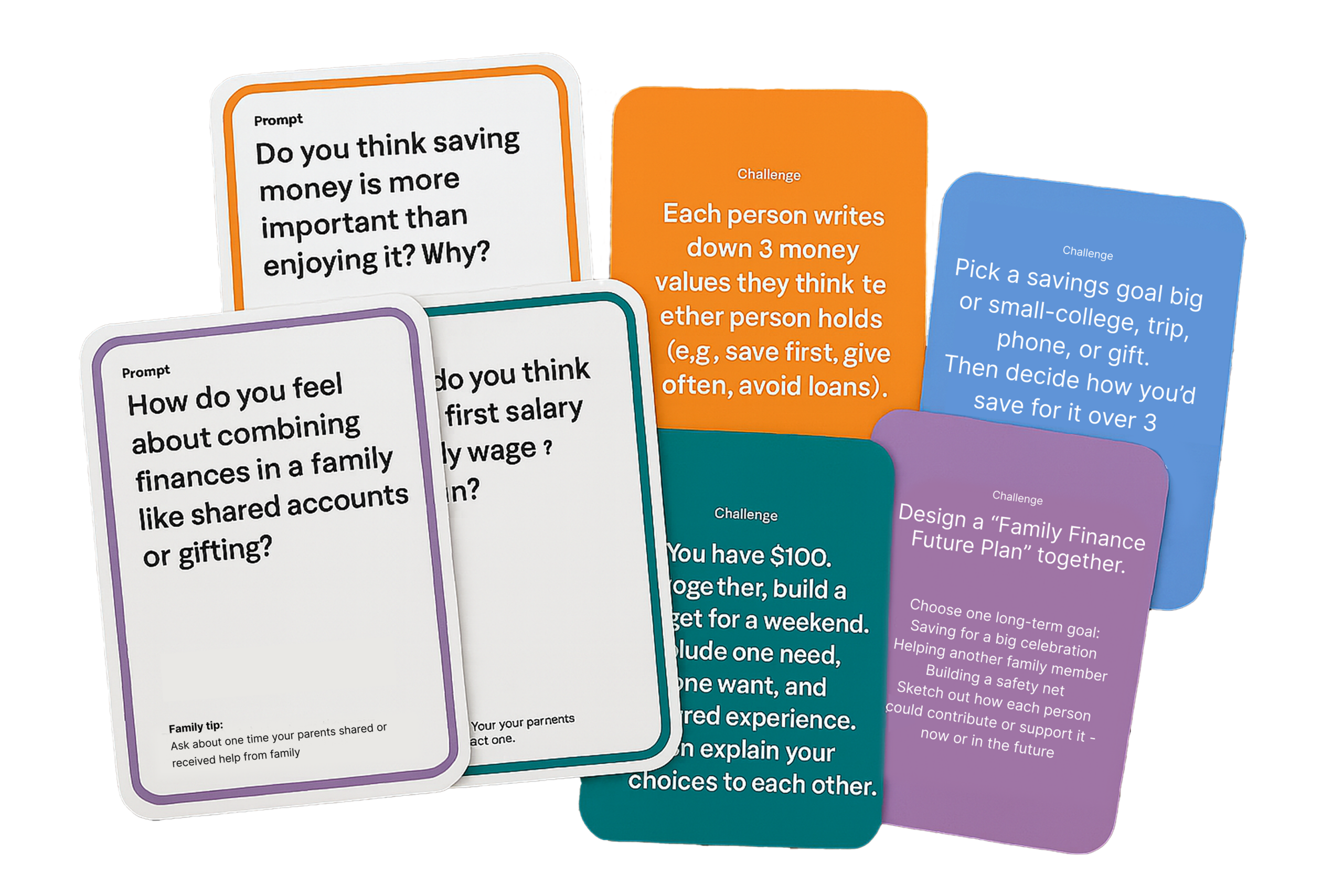
A physical card-based toolkit designed around storytelling and family conversation;
not financial advice. MONEY TALKS gives families a structured but playful way to share experiences, reflect on values, and build financial confidence together.
Impact
Shifted the narrative around financial literacy from instruction to connection. Families moved from avoidance to dialogue, and teens went from feeling excluded from money conversations to feeling like active participants in them.
6+
Interviews showed - financial silence at home isn't intentional, it's inherited
0
existing tools in the market addressed the cultural and intergenerational dimensions of financial literacy for South Asian-Americans
100 %
of teen participants expressed a desire for more transparency around money
Hold to pause
What we did
We followed the Double Diamond framework to explore the space broadly before narrowing in on a specific opportunity. What began as an exploration into financial literacy quickly revealed something deeper; the real barrier wasn't knowledge, it was conversation.
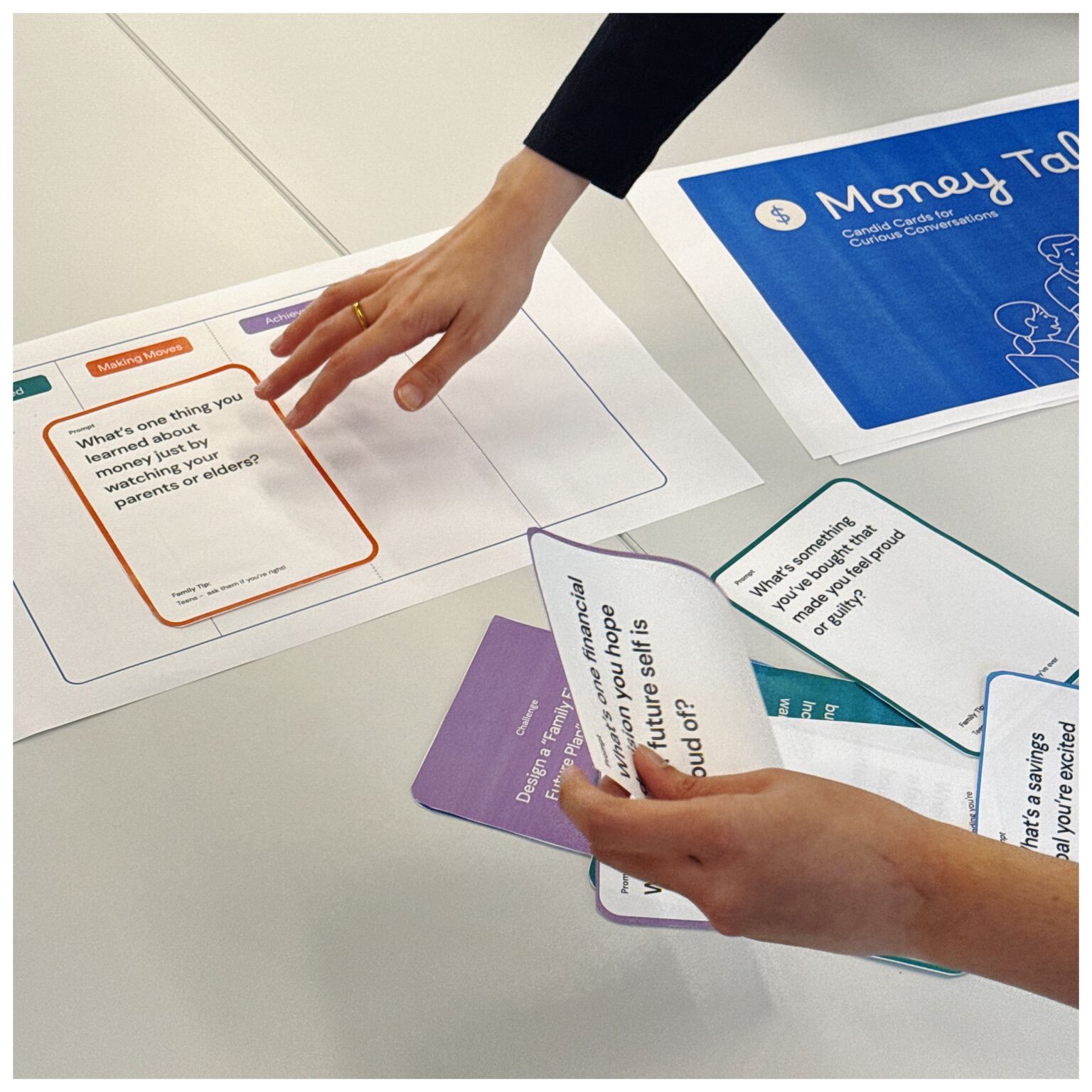
We designed a physical card-based toolkit that uses storytelling, prompts, and collaborative activities to open up financial dialogue between parents and teens, shifting the focus from advice-giving to story-sharing.
How we did it
We conducted six qualitative interviews; three with parents and three with teenagers, to understand both sides of the silence. Responses revealed a striking tension: teens wanted transparency but were afraid to ask, while parents wanted to protect rather than prepare.
Using the Hills Framework, we decomposed our vision into user-centered goals and selected Hill 3 Bridge as our strategic direction. Early prototypes explored digital tools, but research told us screens were creating distance. We pivoted to a physical board game format, which eye contact, humor, and shared storytelling in a way no screen could.
Our primary and secodary research revealed that...
It wasn't that parents didn't want to talk about money.
They just didn't know how to start.
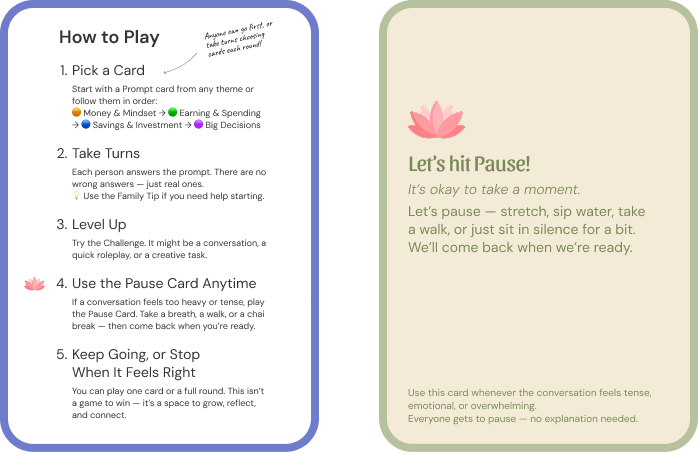
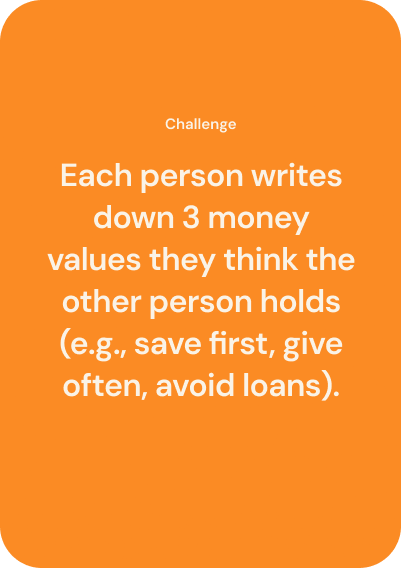
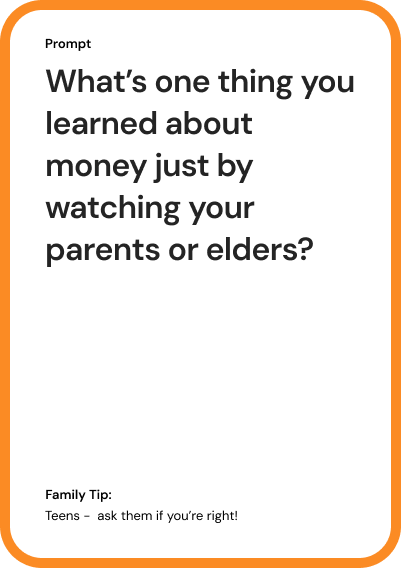
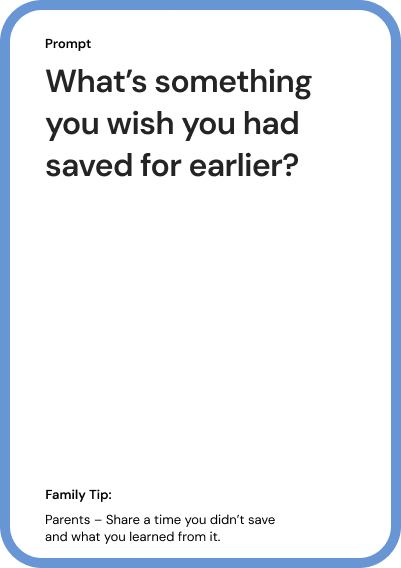
Introducing Money talks
Candid Cards for Curious Conversations
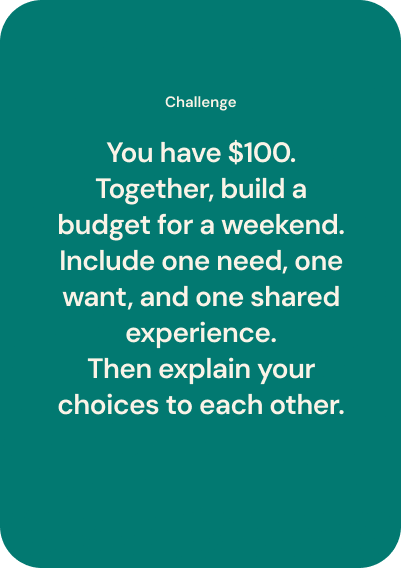
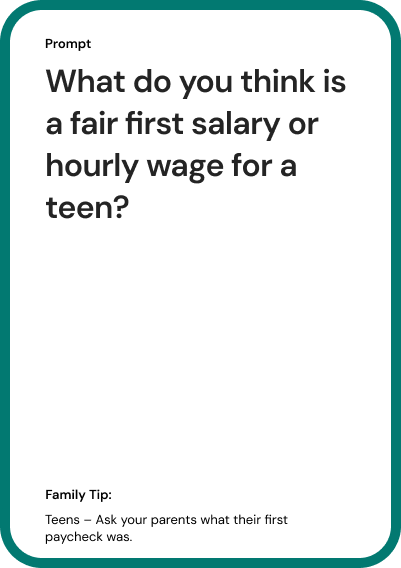
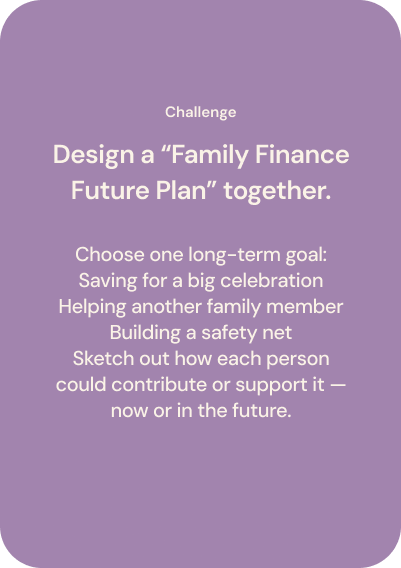
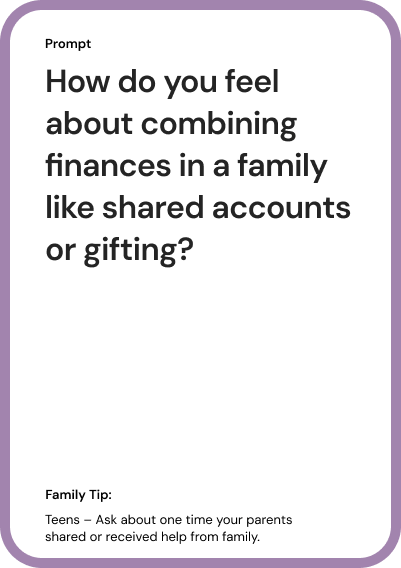

Work Highlight
South Asian-American family dynamics shaped every decision we made; from the tone of the prompts to the structure of the activities. Culture wasn't a constraint we designed around; it was the foundation we designed from.
MONEY TALKS proved that the hardest part of financial literacy isn't understanding money; it's finding the words to talk about it. By designing for trust and connection first, we created something that no app could replicate: a shared experience that brings families to the table and keeps them there.
Interactive Game
Research highlights
how we achieved this in 14 weeks
___ Context
Financial literacy is a critical life skill, yet many South Asian-American teens grow up with limited exposure due to cultural taboos around money. Without early financial conversations, young adults often face -
Confusion
when it comes to managing money
Anxiety
as teens grow older and start making financial decisions
Lack of Confidence
entering adulthood without the tools, language, or habits needed to navigate real-world financial responsibilities
___ Approach
We followed the Double Diamond framework starting broad to explore the space of financial literacy, then narrowing in on a specific opportunity before expanding and refining our solution.

Discover
We conducted six interviews (3 parents, 3 teens)
Teens POV
"Money feels private like I shouldn’t be part of it."
"I feel expected to be responsible, but I’ve never been taught how."
"I want more transparency, but I’m afraid to ask."
Parents POV
"They’ll learn when they need to."
"If I give them control, they might misuse it."
"Too much transparency will overwhelm them."
Confusion
when it comes to taxes, banking and savings
Assumption
that schools will cover financial education
Define
Goal Statement
For
South Asian-American teenagers (ages 13+) and their parents
Who
Struggle with financial education and independence due to cultural taboos in relation to knowledge of modern finance skills
Our
Physical Interactive activity
Is a
Culturally collaborative gaming experience
That
Bridges generational gaps to foster open discussions for families to build financial literacy while honoring cultural values.
Develop
Hills & Sub-Hills Framework
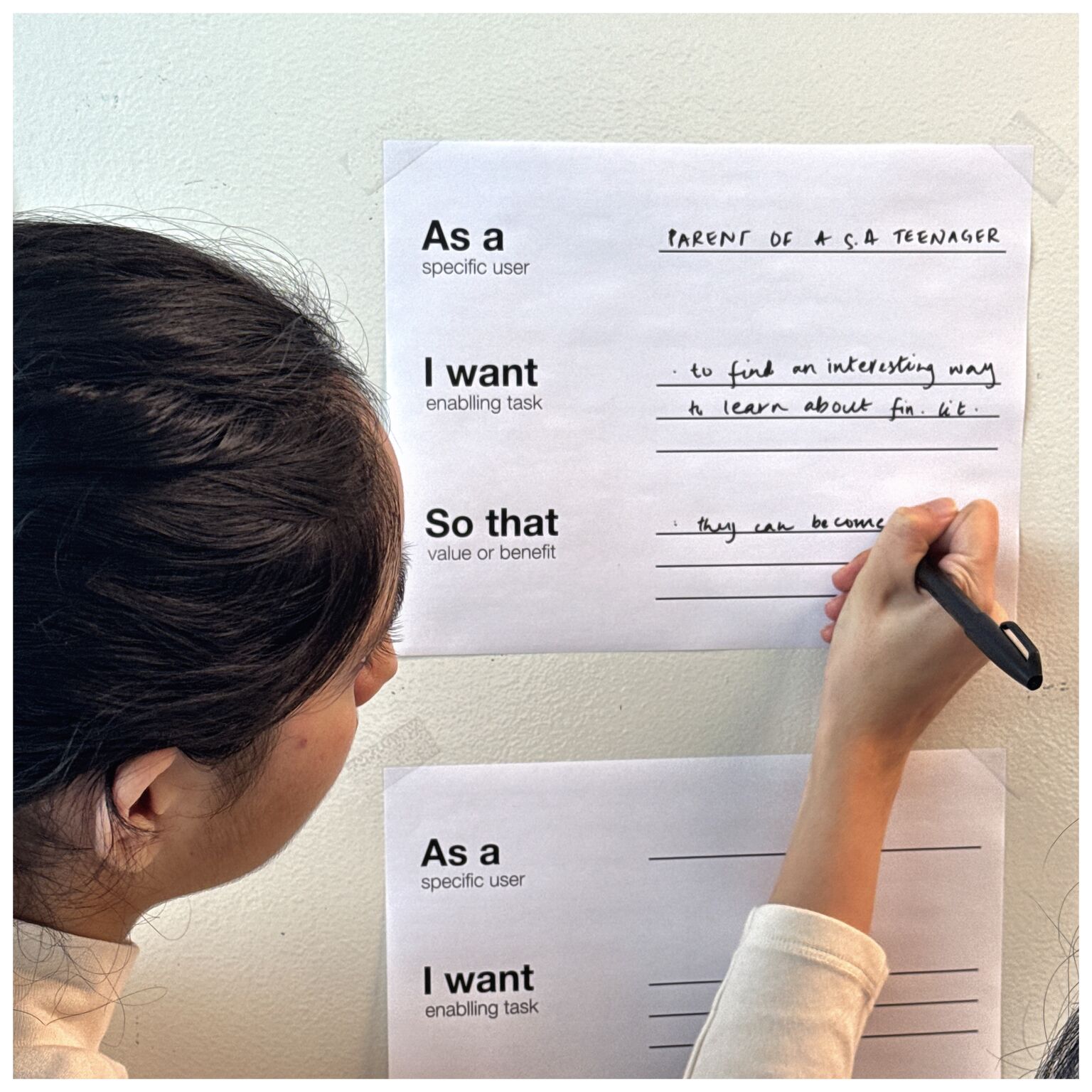
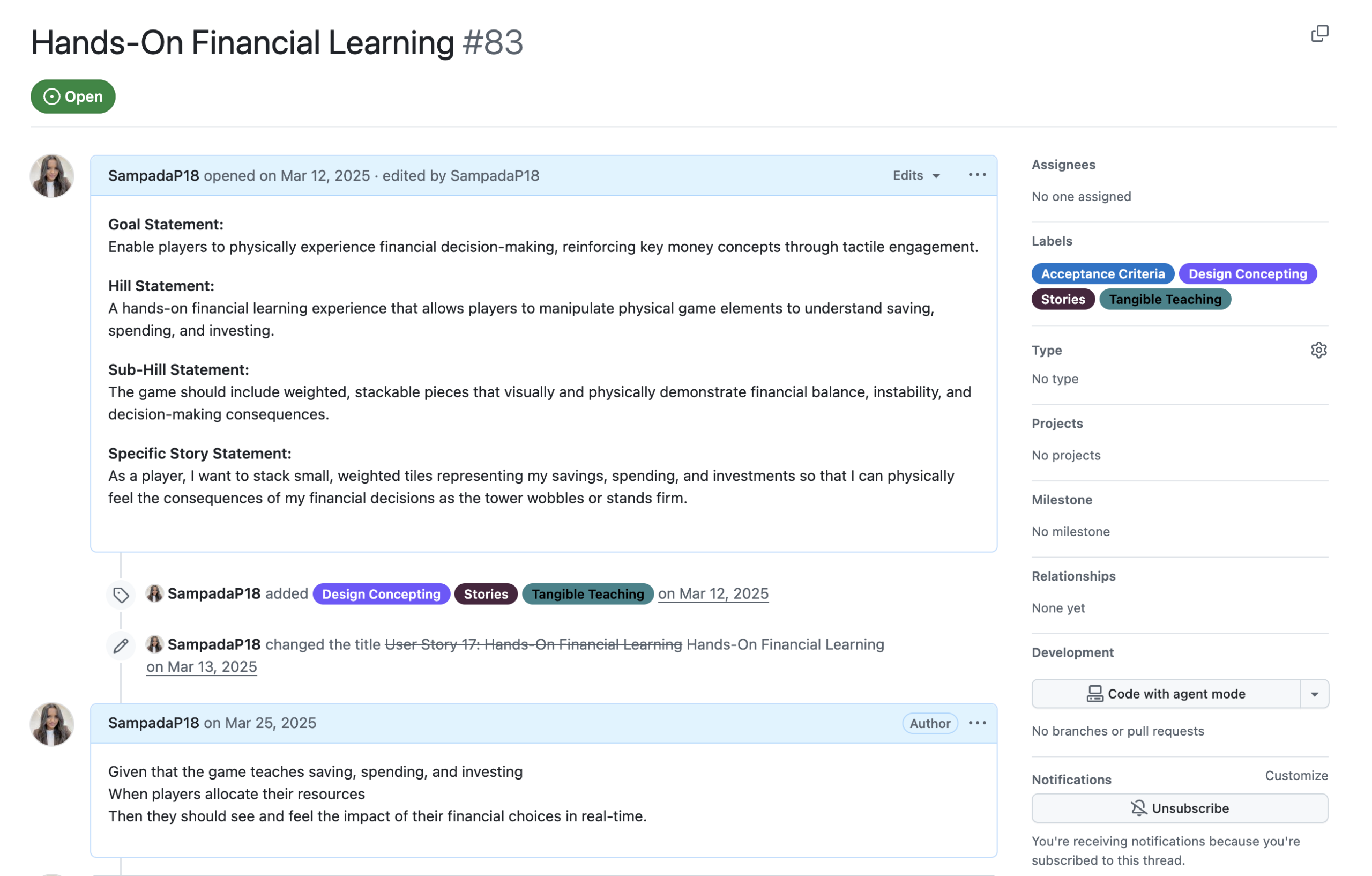
After aligning on our Point of View, we moved into strategy decomposition using the Hills Framework, a tool that helps break down an abstract vision into clearly defined, user-centered goals.
Chosen Hill: 3 Bridge


Service Blueprint

Pivot Insight:
Conversations build more trust than screens
Initial concepts explored digital tools, but research revealed that screens often created distance during money conversations. In contrast, physical play encouraged eye contact, humor, and shared storytelling fostering trust and openness. This led to a pivot toward a board game, making financial conversations feel natural, safe, and collaborative.

The storyboard played a critical role in mapping emotional beats across the user journey from confusion to confidence.
By visually sequencing each step, and building
Trust
Transparency
Shared learning
United States
Email: sampadapote1@gmail.com
© Sampada Pote 2025